What to Include in a Resume: 8 Must-Have Sections (2026 Guide)
Everything you need (and don’t need) on your resume, section by section, with examples of what actually works.
Building a resume from scratch is intimidating. You stare at a blank page wondering: what to include in a resume? How much detail? What do I leave out?
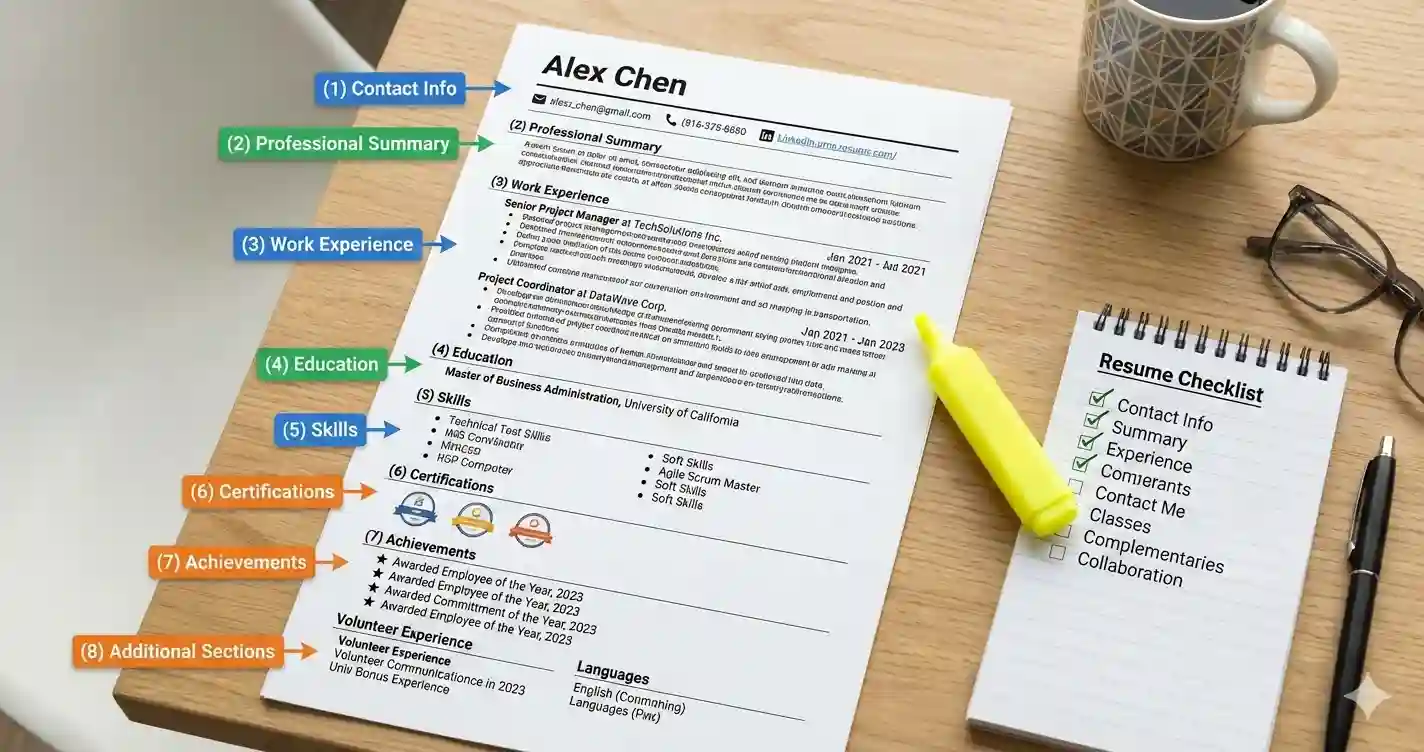
And then you start Googling and find a million conflicting answers. Some people say to include an objective statement. Others say those are outdated. Some say list every job you’ve ever had. Others say focus only on the last 10 years.
Here’s the truth: there are 8 essential sections that every resume should include, plus a few optional ones that make sense for certain situations.
This guide breaks down exactly what to include in a resume—what’s required, what’s optional, and what you should skip entirely.
Let’s get into it.
The 8 Essential Resume Sections (In Order)
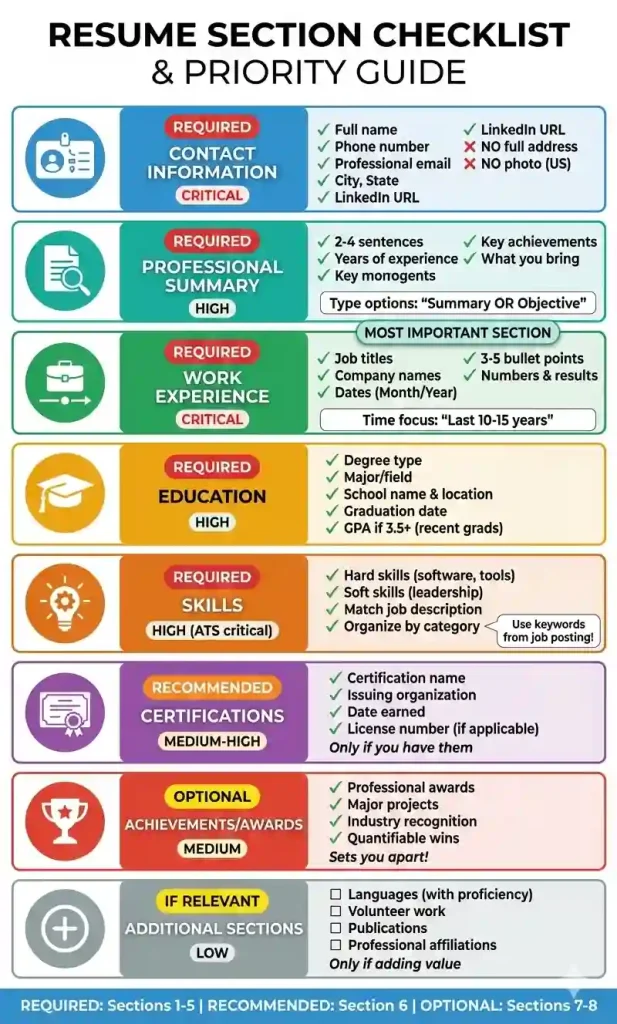
These sections belong on every resume, regardless of your industry, experience level, or career goals. Here’s what to include in a resume:
1. Contact Information
This goes at the top of your resume. Seems obvious, but people mess this up all the time.
What to Include:
- Full name (first and last, middle initial optional)
- Phone number (cell is fine, make sure voicemail is professional)
- Email address (professional—firstname.lastname@email.com)
- Location (city and state—full address not needed)
- LinkedIn profile URL (customize it so it’s clean: linkedin.com/in/yourname)
Optional to Include:
- Portfolio website or personal website
- GitHub profile (for developers)
- Relevant social media (only if professional—designers, writers, marketers)
Do NOT Include:
- Full street address (safety concern, plus it takes up space)
- Photo (unless you’re in a country/industry where it’s expected)
- Birth date or age
- Marital status
- Social Security number
Example:
SARAH JOHNSON Chicago, IL | (555) 123-4567 | sarah.johnson@email.com linkedin.com/in/sarahjohnson | sarahjohnson.com
2. Professional Summary or Resume Objective
This is 2-4 sentences at the top of your resume that summarize who you are professionally. Think of it as your elevator pitch on paper.
Professional Summary (for experienced professionals): Highlights your experience, key skills, and what you bring to the table.
Resume Objective (for entry-level or career changers): States your career goals and what you’re looking for.
What to Include:
- Your years of experience or current status
- Key skills or areas of expertise
- Notable achievement or value you bring
- What you’re looking for (optional, but helps for career changers)
Example – Professional Summary:
“Results-driven marketing manager with 7+ years of experience leading digital campaigns for B2B tech companies. Proven track record of increasing lead generation by 150% and reducing customer acquisition costs by 30%. Seeking to leverage data-driven marketing expertise to drive growth at an innovative SaaS company.”
Example – Resume Objective:
“Recent business graduate with strong analytical skills and internship experience in financial analysis. Seeking an entry-level financial analyst position to apply statistical modeling and data visualization skills while contributing to company growth.”
3. Work Experience
This is the most important section. It’s what hiring managers spend the most time reading when deciding what to include in a resume evaluation.
What to Include for Each Job:
- Job title (your official title)
- Company name (and location if not obvious)
- Dates of employment (Month/Year format: “June 2020 – Present”)
- 3-5 bullet points describing your responsibilities and achievements
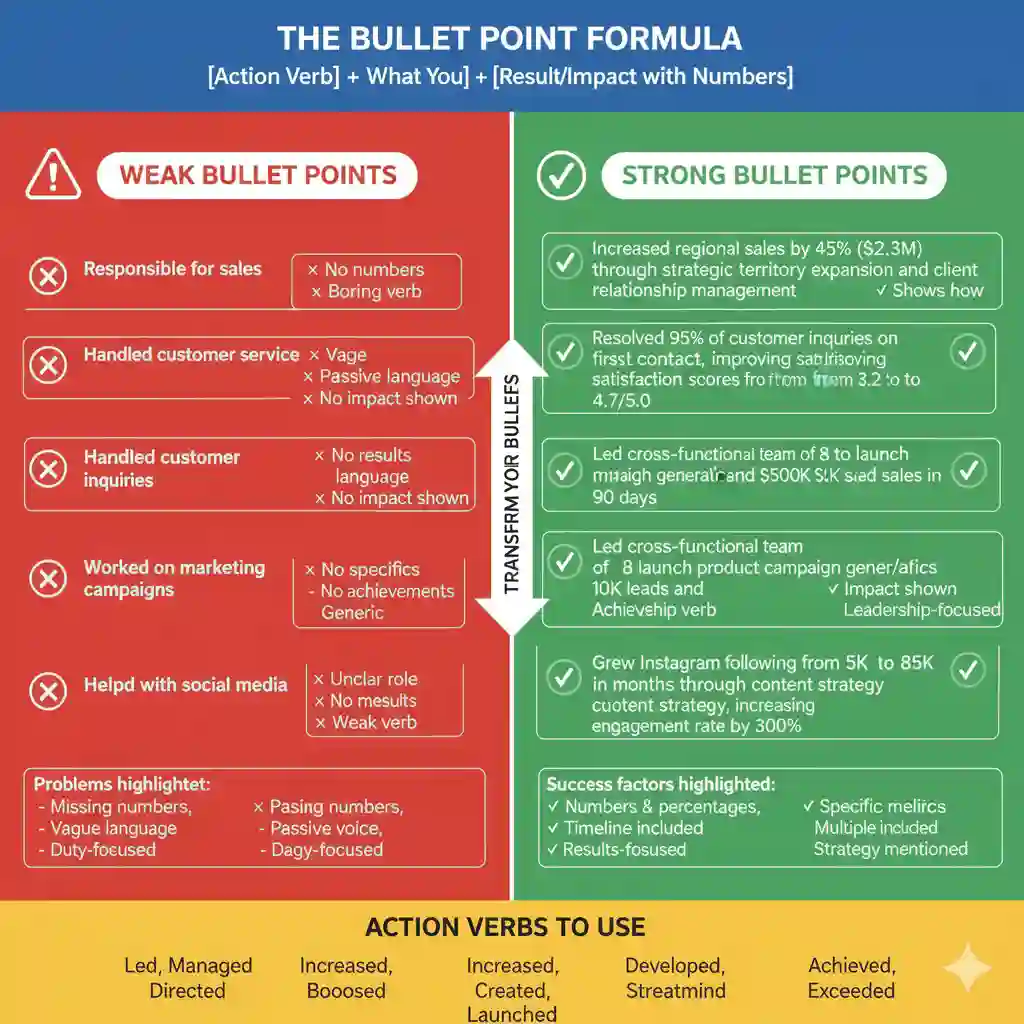
How to Write Your Bullet Points:
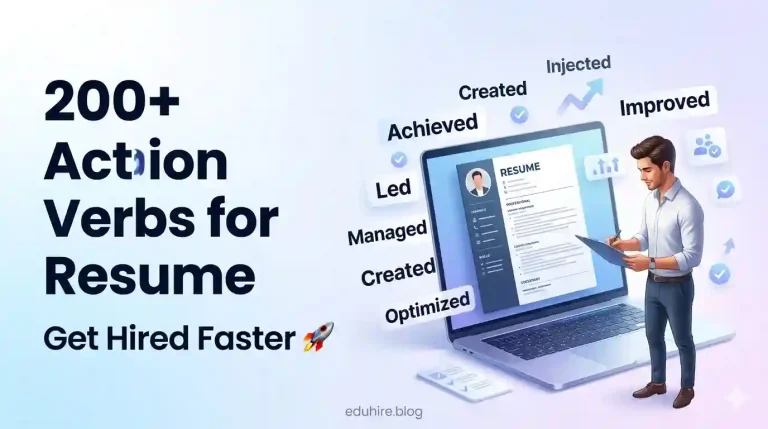
- Start with strong action verbs (“Led,” “Managed,” “Developed,” “Increased”)
- Include numbers and results (“Increased sales by 25%” not “Responsible for sales”)
- Focus on achievements, not just duties (What did you accomplish? What changed because of your work?)
- Tailor to the job you’re applying for (highlight relevant experience)
Example:
Marketing Manager | TechStart Inc. | Chicago, IL | June 2021 – Present • Led digital marketing strategy resulting in 150% increase in qualified leads • Managed $500K annual marketing budget and team of 5 specialists • Implemented marketing automation platform, reducing lead response time by 60% • Developed content strategy that increased organic traffic by 200% in 12 months • Collaborated with sales team to improve lead-to-customer conversion rate by 35%
How Far Back to Go:
- 10-15 years of experience is the standard
- Focus on recent, relevant roles
- Older jobs can be summarized: “Additional experience: Various sales roles, 2005-2010”
4. Education
List your educational background in reverse chronological order (most recent first).
What to Include in a Resume Education Section:
- Degree type (Bachelor of Arts, Master of Science, etc.)
- Major/field of study
- School name
- Location (city, state)
- Graduation date (month/year or just year)
Also check this Harward’s guide on what to include in Resume.
Optional to Include:
- GPA (only if 3.5+ and you’re a recent grad)
- Honors or awards (Dean’s List, summa cum laude, scholarships)
- Relevant coursework (only if entry-level and directly relevant to the job)
- Study abroad (if relevant to the position)
Example:
Bachelor of Science in Marketing University of Illinois | Urbana-Champaign, IL | May 2018 GPA: 3.7/4.0 | Dean’s List (4 semesters)
What If You Didn’t Graduate?
Still list the school, dates attended, and field of study. Just don’t include a graduation date or degree. Write “Coursework in [Major]” or “Studies in [Major]” instead.
Example:
Coursework in Computer Science State University | City, State | 2016-2018 Completed 90 credits toward Bachelor’s degree
5. Skills
This section is critical for passing ATS (Applicant Tracking Systems). It’s where you list specific, relevant skills that match the job description.
What to Include in a Resume Skills Section:
- Hard skills (technical abilities: software, tools, languages)
- Soft skills (interpersonal abilities: communication, leadership)
- Industry-specific skills (certifications, methodologies, specialized knowledge)
How to format:
- Organize by category (Technical Skills, Languages, Soft Skills)
- Use bullet points or a simple list
- Include proficiency levels for languages (“Spanish – Fluent”)
Example:
SKILLS Technical: Google Analytics, SEMrush, HubSpot, Salesforce, Adobe Creative Suite, HTML/CSS Marketing: SEO/SEM, Content Strategy, Email Marketing, Social Media Marketing, Marketing Automation, A/B Testing Soft Skills: Project Management, Team Leadership, Data Analysis, Strategic Planning, Cross-functional Collaboration
Pro tip: Pull keywords directly from the job description. If they want “project management,” use that exact phrase.
Don’t lie. Only list skills you actually have. You might be tested in the interview.
6. Certifications and Licenses
If you have relevant professional certifications or licenses, create a dedicated section. This shows you’re committed to your field and have verified expertise.
What to Include:
- Certification name (exactly as it appears on your credential)
- Issuing organization
- Date earned or expiration date
- Credential ID or license number (if applicable)
Example:
CERTIFICATIONS • Project Management Professional (PMP) | Project Management Institute | 2023 • Google Analytics Individual Qualification | Google | 2024 • HubSpot Inbound Marketing Certification | HubSpot Academy | 2024 • Certified ScrumMaster (CSM) | Scrum Alliance | 2022
Skip this section if: You have no relevant certifications. Don’t force it or list outdated/irrelevant credentials.
7. Achievements and Awards (Optional but Powerful)
This section sets you apart. It’s where you showcase recognition, major accomplishments, or quantifiable wins that don’t fit elsewhere.
What to Include:
- Professional awards (Employee of the Year, Top Salesperson)
- Industry recognition (featured in publications, speaking engagements)
- Major projects or launches (led X project that generated $Y)
- Academic honors (if recent grad and relevant)
Example:
ACHIEVEMENTS • Top Sales Performer | Exceeded annual quota by 180% | 2024 • Innovation Award | Developed automated reporting system saving 20 hours/week | 2023 • Published: “Future of Digital Marketing” | Marketing Today Magazine | 2024 • Speaker | Digital Marketing Summit Chicago | 2023
8. Additional Sections (Include If Relevant)
These final sections depend on your situation and the job. Only include them if they add value.
Languages
If you speak multiple languages, list them with proficiency levels:
- Native/Bilingual
- Fluent/Professional working proficiency
- Conversational/Basic
Example:
LANGUAGES Spanish (Native) | French (Fluent) | German (Conversational)
Volunteer Work
Include if:
- You’re entry-level with limited work experience
- The volunteer work is relevant to the job
- You gained transferable skills
Format like work experience:
Volunteer Marketing Coordinator | Local Food Bank | 2023-Present • Manage social media accounts, increasing follower engagement by 150% • Designed email campaigns for fundraising events raising $50K annually
Publications and Presentations
For academic, research, or thought leadership roles:
Example:
PUBLICATIONS • “Machine Learning Applications in Healthcare” | Journal of Medical Technology | 2024 • “The Future of Remote Work” | Harvard Business Review | 2023
Professional Affiliations
Memberships in professional organizations show you’re engaged in your industry:
Example:
PROFESSIONAL AFFILIATIONS • American Marketing Association | Member since 2020 • Digital Marketing Institute | Certified Member | 2022-Present
What NOT to Include in a Resume
Just as important as knowing what to include in a resume is knowing what to leave out:
1. Personal Information
- Age or date of birth
- Marital status
- Social Security number
- Photo (unless required in your country/industry)
- Religious or political affiliations
2. Outdated Sections
- “References available upon request” (they’ll ask if they want them)
- Objective statements (unless you’re entry-level or changing careers—use professional summary instead)
- Full mailing address (city/state is enough)
3. Irrelevant Information
- High school information (if you have a college degree)
- Jobs from 15+ years ago (unless highly relevant)
- Hobbies (unless directly relevant to the job)
- Salary information
4. Unprofessional Elements
- Unprofessional email addresses (partygirl87@hotmail.com)
- Fancy fonts or graphics (unless you’re a designer)
- Lies or exaggerations
- Typos or grammatical errors
Resume Section Order: Does It Matter?
Yes. The order you present information affects how hiring managers read your resume.
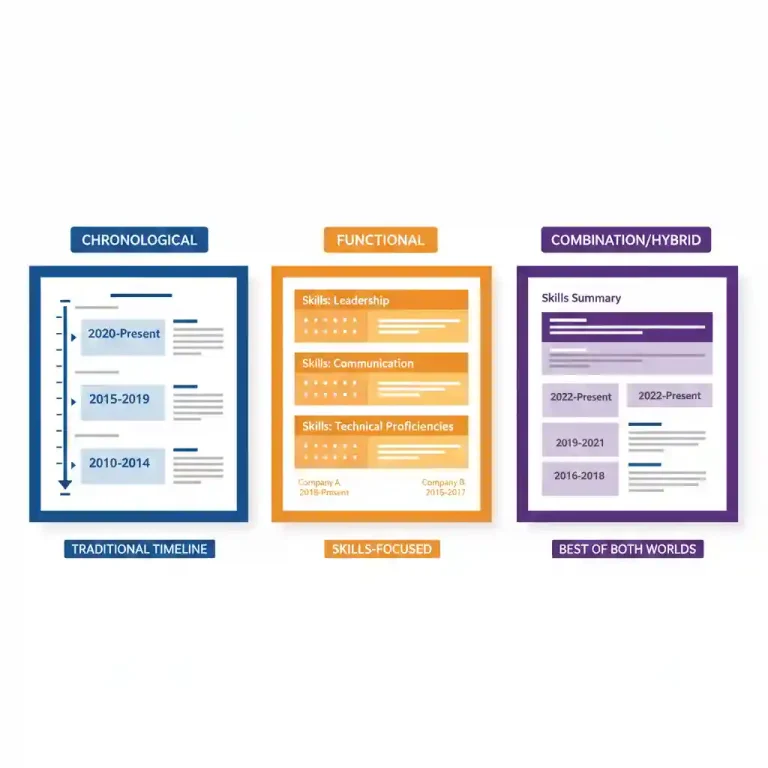
Standard Order (Most Common):
- Contact Information
- Professional Summary
- Work Experience
- Education
- Skills
- Certifications (if applicable)
- Additional Sections (as relevant)
Exceptions:
- Recent graduates: Put Education before Work Experience
- Career changers: Lead with Skills to highlight transferable abilities
- Technical roles: Skills section can come right after Summary
What to Include in a Resume: Quick Checklist
Before you submit, make sure your resume has:
- Contact info (name, phone, email, location, LinkedIn)
- Professional summary or objective
- Work experience with quantified achievements
- Education details
- Relevant skills (matching job description keywords)
- Certifications (if you have them)
- Additional sections only if relevant
- No typos or errors
- Tailored to the specific job
- Professional formatting and font
The Bottom Line on What to Include in a Resume
A strong resume has 8 essential sections: contact information, professional summary, work experience, education, skills, certifications, achievements, and relevant additional sections.
But knowing what to include in a resume isn’t just about checking boxes. It’s about presenting your qualifications clearly, highlighting what makes you valuable, and tailoring everything to the job you want.
The key: Focus on what’s relevant. Everything on your resume should answer the question: “Why should we hire you for THIS job?”
Now you know exactly what to include. Go build a resume that gets you interviews.
Ready to Write Your Resume?
Check out our complete guides on resume writing, and how to make your resume stand out from the competition.
Discover more from eduhire.blog
Subscribe to get the latest posts sent to your email.