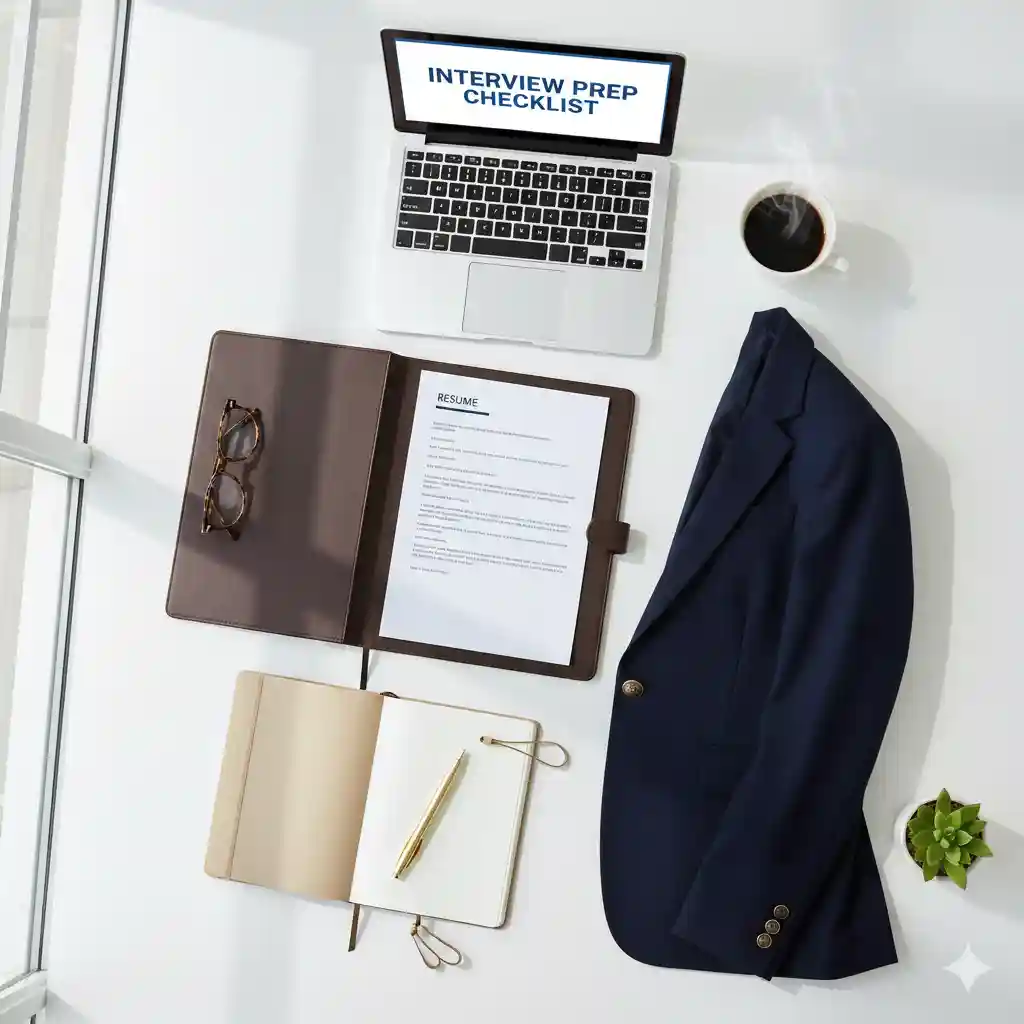
How to Prepare for an Interview: Ultimate 2026 Step-by-Step Guide
Everything you need to know to walk into any interview confident, prepared, and ready to impress.
You got the interview. Congrats! Now comes the part where you completely overthink everything and convince yourself you’re going to mess it up.
Sound familiar?
Here’s the truth: most people don’t know how to prepare for an interview properly. They might spend 20 minutes Googling “common interview questions” the night before, pick out an outfit, and call it done. Then they walk in feeling nervous and unprepared, which shows.
But interview preparation doesn’t have to be mysterious or overwhelming. There’s actually a pretty straightforward process that’ll have you walking in confident instead of freaking out.
Let’s break down exactly how to prepare for an interview, step by step, so you can show up as your best self and actually land the job.
When to Start Preparing (And What to Do When)
The moment you schedule the interview, the clock starts. Here’s how to prepare for an interview based on how much time you have:
One Week Before
- Research the company thoroughly
- Study the job description and identify key requirements
- Prepare your stories using the STAR method
- Start practicing common interview questions out loud
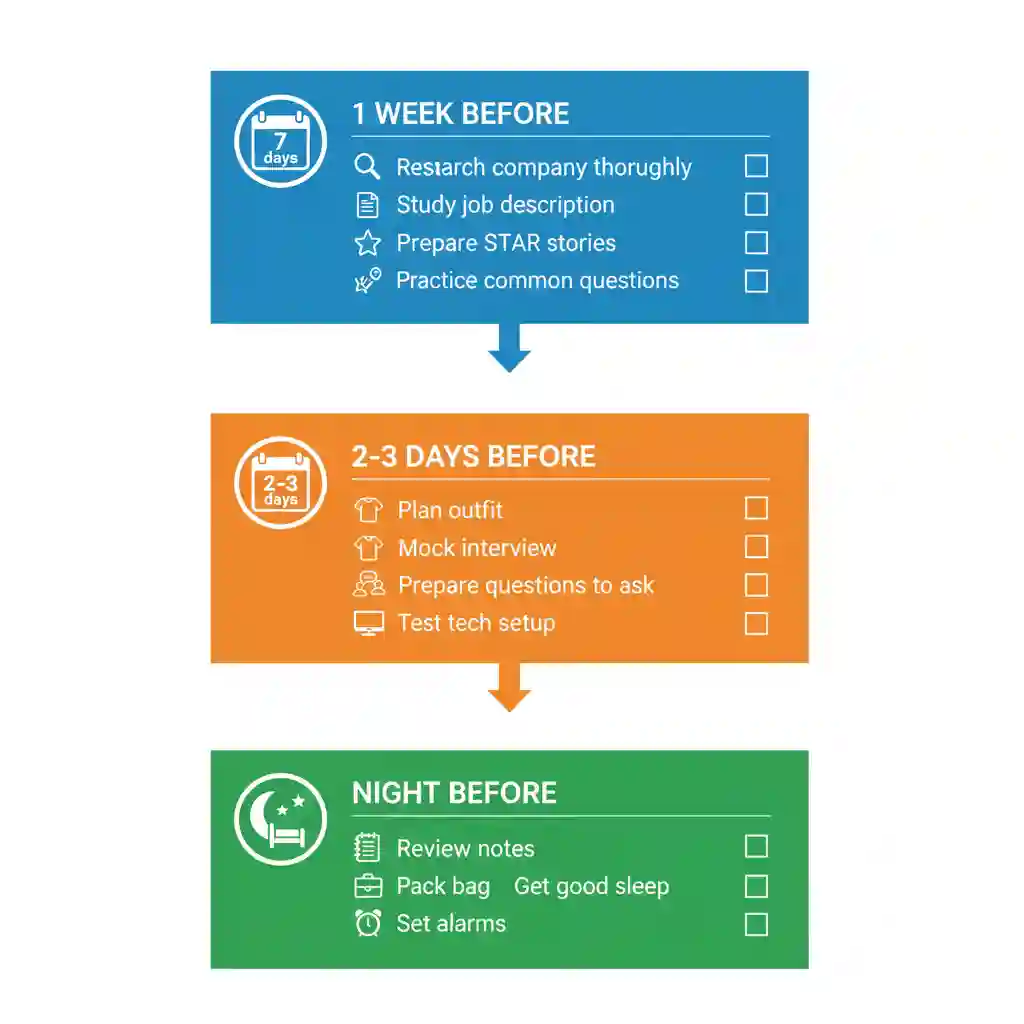
2-3 Days Before
- Plan your outfit and make sure it’s clean and ready
- Do a mock interview with a friend or record yourself
- Prepare thoughtful questions to ask the interviewer
- Map out your route or test your video setup (for virtual interviews)
Night Before
- Review your notes one final time
- Pack your bag with everything you need
- Get a good night’s sleep (no cramming at midnight)
- Set multiple alarms
Step 1: Research the Company Like Your Job Depends on It
Because it does. Nothing screams “I don’t actually care about this job” louder than not knowing basic information about the company.
What to research:
Company Basics
- What does the company actually do? (Be able to explain it in one sentence)
- Who are their customers or clients?
- How big is the company? (Revenue, employee count, locations)
- Who are their main competitors?
Recent News and Developments
- Check their website’s news or blog section
- Google “[Company Name] news” for recent headlines
- Look for new products, funding rounds, acquisitions, or major changes
- Read their latest press releases
Company Culture and Values
- Read their “About Us” and “Careers” pages
- Check out their social media (LinkedIn, Instagram, Twitter)
- Look at employee reviews on Glassdoor (but take with a grain of salt)
- See if they’ve won any “Best Place to Work” awards
Your Interviewer
If you know who’s interviewing you, look them up on LinkedIn:
- What’s their role at the company?
- How long have they been there?
- Any shared connections or interests?
Pro tip: Don’t be weird about this. Don’t mention that you stalked their entire social media history. But do use the information to find common ground or understand their perspective.
Step 2: Dissect the Job Description
The job description is literally a cheat sheet for the interview. It tells you exactly what they’re looking for.
How to use it to prepare for an interview:
- Highlight key requirements and skills
Pull out the must-have qualifications and the nice-to-have skills. These are what they’ll ask about.
- Match your experience to each requirement
For each key requirement, write down a specific example from your experience that demonstrates you have that skill.
- Note the language they use
If they say “collaborative environment,” prepare examples of teamwork. If they emphasize “fast-paced,” have stories about handling pressure.
- Identify potential gaps
If there’s something you don’t have, prepare to explain how you’ll learn it or how your other skills compensate.
Step 3: Prepare Your Stories Using the STAR Method
Most interview questions ask you to give examples from your past experience. The STAR method keeps your answers organized and compelling.
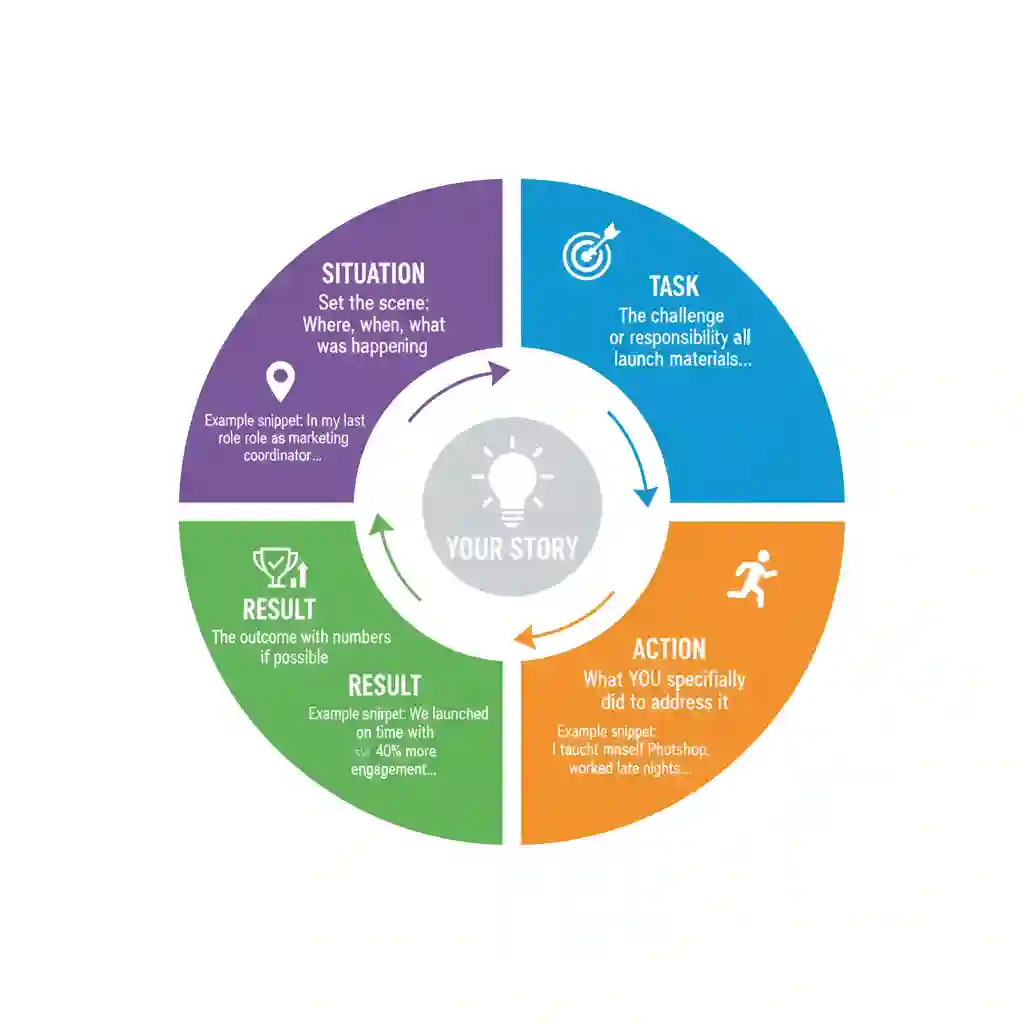
STAR stands for:
- Situation: Set the context (where, when, what was happening)
- Task: Explain the challenge or responsibility
- Action: Describe what YOU specifically did
- Result: Share the outcome (with numbers if possible)
Stories You Should Have Ready
Prepare 5-7 stories that cover different scenarios:
- A time you solved a difficult problem
- A time you worked successfully in a team
- A time you showed leadership
- A time you handled conflict
- A time you failed and what you learned
- A time you went above and beyond
- A time you dealt with a difficult customer or situation
Example STAR Story:
Question: “Tell me about a time you had to meet a tight deadline.” Situation: “In my last role as a marketing coordinator, our main designer quit two weeks before a major product launch.” Task: “I needed to redesign all launch materials—website banners, social posts, and email templates—in time for the scheduled release.” Action: “I taught myself basic Photoshop using YouTube tutorials, worked with our copywriter to simplify designs, and pulled two late nights to get everything done. I also set up a quick approval process with my manager to avoid delays.”
Result: “We launched on time, and the campaign generated 40% more engagement than our previous launch. My manager was so impressed that I got to lead design on the next campaign.”
Check out the best study tips proven by experiments.
Step 4: Practice Out Loud (Yes, Really)
Reading your answers in your head is not the same as saying them out loud. Trust me on this one.
How to practice effectively:
Do a Mock Interview
Get a friend, family member, or career counselor to ask you questions. Make it as realistic as possible—dress up, sit across from each other, take it seriously.
Record Yourself
Set up your phone and record yourself answering questions. Watch it back. It’ll be cringey, but you’ll spot things you didn’t realize you were doing (like saying “um” every three seconds).
Practice Your Introduction
The “Tell me about yourself” question comes up in almost every interview. Have a 60-90 second pitch ready that covers:
- Your current role/situation
- Relevant experience highlights
- Why you’re interested in this role
Step 5: Prepare Questions to Ask Them
When they ask “Do you have any questions for us?” at the end, the answer better be yes. “No, I’m good” makes you look uninterested.
Good questions to prepare for an interview:
About the Role
- “What does success look like in this role in the first 90 days?”
- “What are the biggest challenges someone in this position would face?”
- “How does this role contribute to the team’s goals?”
About the Team
- “Can you tell me about the team I’d be working with?”
- “What’s the collaboration style like here?”
- “How does the team typically handle [relevant challenge]?”
About the Company
- “What are the company’s priorities for the next year?”
- “How would you describe the company culture?”
- “What do you like most about working here?”
Questions to avoid:
- Anything about salary or benefits (save for later rounds)
- “What does your company do?” (you should already know this)
- Questions that make it all about you (“When would I get promoted?”)
Step 6: Handle the Logistics
The boring but important stuff that can make or break your interview:
For In-Person Interviews
- Know where you’re going: Map the route, check for parking, plan to arrive 10-15 minutes early
- What to bring: Extra copies of your resume, a notepad and pen, portfolio (if relevant), list of references
- Dress appropriately: When in doubt, slightly overdress. Clean, pressed, professional
Also check this Indeed.com’s guide.
For Virtual Interviews
- Test your tech: Check camera, microphone, internet connection 30 minutes before
- Set up your space: Clean background, good lighting (face the window), eye-level camera
- Minimize distractions: Close other programs, silence phone, tell people you’re busy
- Have notes handy: You can keep notes off-screen, but don’t obviously read from them
Step 7: Prepare Mentally (Don’t Skip This)
All the research and practice in the world won’t help if you walk in there a nervous wreck.
Manage Your Nerves
- Reframe it: It’s not an interrogation, it’s a conversation. You’re checking them out as much as they’re checking you out
- Breathe: Before you go in, take 5 deep breaths. Sounds cheesy, actually works
- Remember: They want you to succeed. They’re hoping you’re the right person so they can stop interviewing
- Power pose: Stand in a confident pose for 2 minutes before the interview. It actually changes your body chemistry
Build Confidence
The better you prepare for an interview, the more confident you’ll feel. But also:
- Review your accomplishments the morning of
- Remember: you earned this interview. They saw something in your application
- Focus on showing who you are, not on being perfect
Interview Day: Final Checklist
Morning Of
- Eat a good breakfast (not too heavy, nothing that’ll make you gassy)
- Review your notes one last time
- Check your outfit (lint, stains, wrinkles)
- Leave earlier than you think you need to
Right Before
- Turn off or silence your phone completely
- Pop a mint (not gum)
- Visit the bathroom
- Take those deep breaths
During the Interview
- Smile and make eye contact
- Give a firm handshake (not bone-crushing)
- Listen carefully to the questions
- It’s okay to take a second to think before answering
- Be yourself (people can tell when you’re being fake)
- Ask for clarification if you don’t understand a question
Common Preparation Mistakes to Avoid
Mistake 1: Winging It
“I’m good at thinking on my feet” is not a preparation strategy. Even if you’re naturally good at talking, you still need to prepare for an interview. The people who wing it are obvious, and they usually don’t get the job.
Mistake 2: Memorizing Answers Word-for-Word
You’ll sound like a robot reading a script. Prepare talking points and key stories, but let your answers be natural.
Mistake 3: Only Preparing Answers, Not Questions
An interview is a two-way street. You should be evaluating them too. Having no questions makes you look disengaged.
Mistake 4: Ignoring the Job Description
It’s the blueprint for what they’ll ask about. If you don’t prepare examples for the key requirements, you’re leaving it to chance.
Mistake 5: Showing Up Unprofessionally
Late arrival, messy appearance, or not bringing what you need creates a terrible first impression that’s hard to recover from.
After the Interview: Don’t Stop Now
Your interview preparation doesn’t end when you walk out the door.
Send a Thank You Email
Within 24 hours, send a brief email thanking them for their time. Mention something specific from the conversation and reiterate your interest.
Reflect on What Went Well and What Didn’t
Write down questions you struggled with, things you wish you’d said differently, or topics you want to research more for next time.
Follow Up If You Don’t Hear Back
If they said they’d get back to you by a certain date and didn’t, wait 2-3 days past that, then send a polite follow-up email.
The Bottom Line
Learning how to prepare for an interview isn’t complicated, but it does take time and effort. Most people don’t do it properly, which means if you follow this guide, you’re already ahead of the competition.
The key is starting early enough that you’re not cramming the night before. Give yourself at least a week if possible. Research the company, prepare your stories, practice out loud, and handle the logistics.
And remember: they want you to do well. They’re not trying to trick you or catch you in a lie. They’re hoping you’re the person they’ve been looking for so they can stop interviewing and get back to work.
You’ve got this. Now go prepare for that interview and show them what you’re capable of.
Discover more from eduhire.blog
Subscribe to get the latest posts sent to your email.