
How to Choose a Career: Step-by-Step 2025 Guide to Your Ideal Path
Stop stressing about picking the ‘perfect’ career. Here’s how to actually choose a career that fits who you are.
Choosing a career might be one of the most pressure-filled decisions you’ll ever make. And honestly? That pressure doesn’t help.
Everyone acts like you need to figure out your entire life path right now, find your one true calling, and commit to it forever. But that’s not how careers actually work anymore. Most people change careers multiple times, and the path is rarely straight.
Still, you need to start somewhere. And if you’re staring at a blank page wondering how to choose a career that won’t make you miserable, you’re in the right place.
This guide will walk you through a practical framework for choosing a career—one that’s based on who you actually are, not who you think you should be.
Let’s figure this out.
First, Let’s Kill Some Career Choice Myths
Before we get into how to choose a career, let’s clear up some unhelpful advice you’ve probably heard:
Myth 1: “Follow Your Passion”
This sounds inspiring, but it’s misleading. Most people don’t have one clear passion. And even if you love something as a hobby, doing it 40 hours a week for money might kill that love.
Better approach: Find work you’re good at, that solves problems you care about, and that pays you fairly. Passion often follows competence.
Myth 2: “You Need to Choose the Right Career Now”
The average person changes careers 5-7 times in their lifetime. Your first career choice isn’t permanent. It’s just your first move in a much longer game.
Better approach: Choose a career that interests you now and gives you transferable skills. You can pivot later.
Myth 3: “You Should Know What You Want to Do”
How are you supposed to know what you want to do if you’ve never done most jobs? You’re not supposed to have it all figured out. Nobody does at the start.
Better approach: Experiment, try things, and learn what you actually like by doing it—not by imagining it.
A Practical Framework for How to Choose a Career
Okay, now that we’ve cleared out the bad advice, here’s a realistic process for choosing a career that actually works:
Step 1: Start with Self-Assessment (But Keep It Real)
You can’t choose a career without understanding yourself first. But we’re not talking about finding your ‘purpose’ or discovering your ‘true self.’ We’re talking about practical self-knowledge.
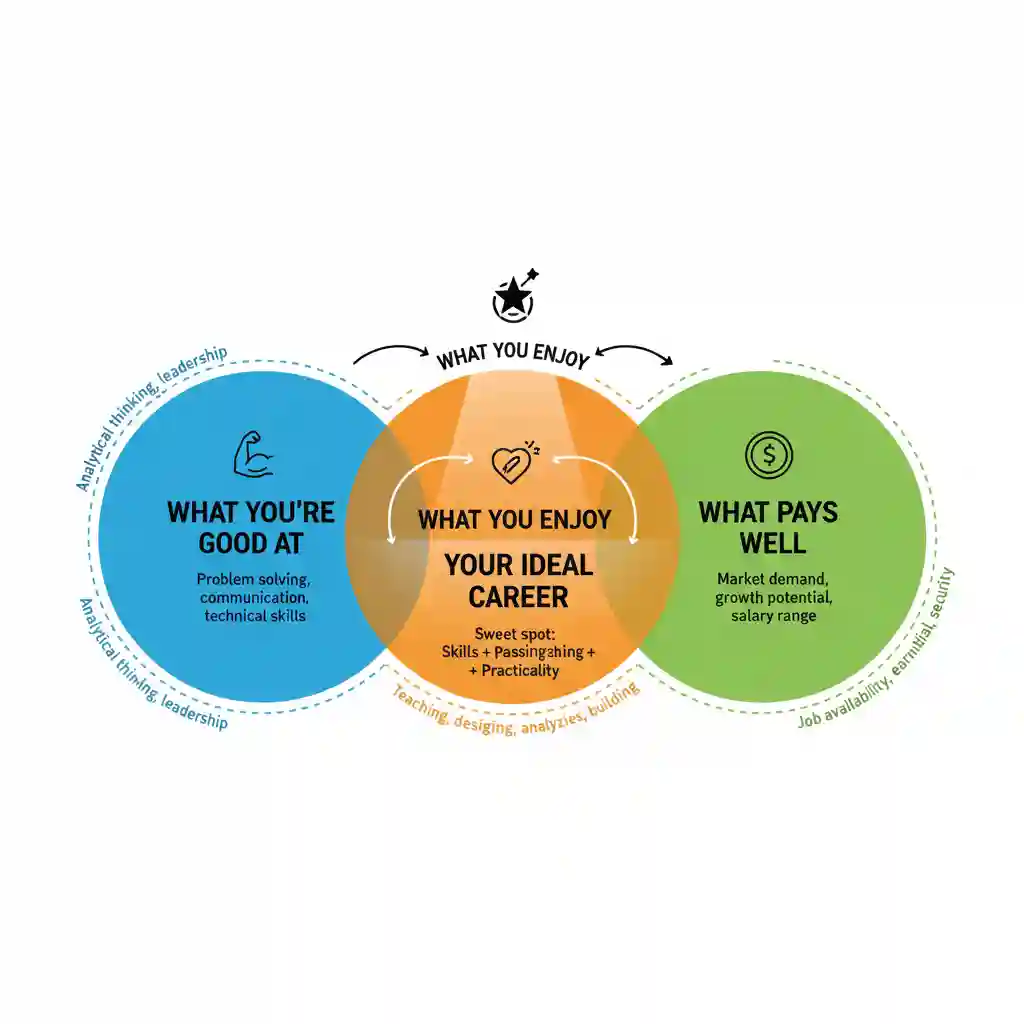
What Are You Actually Good At?
Not what you wish you were good at. What comes naturally to you? What do people ask you for help with?
Ask yourself:
- What tasks do you pick up quickly?
- What do friends and family say you’re good at?
- What have you received positive feedback on in school or work?
- What feels easy to you but hard for others?
Write these down. These are your natural strengths—the foundation for choosing a career path.
Check out this coursera’s guide.
What Do You Actually Enjoy?
Again, be honest. Not what sounds impressive or what your parents want. What activities make time disappear for you?
Consider:
- Do you like working with people or alone?
- Do you prefer creating things or analyzing things?
- Do you like routine or variety?
- Are you more energized by strategy or execution?
- Do you want to lead or contribute individually?
What Are Your Non-Negotiables?
These are your deal-breakers. The things you absolutely need (or absolutely can’t tolerate) in a career.
Examples:
- Work-life balance (can’t do 60-hour weeks)
- Earning potential (need to make X amount)
- Location flexibility (must be remote or in certain city)
- Creative expression (need room for creativity)
- Helping others (work needs to make a difference)
When you’re choosing a career, these non-negotiables will eliminate entire categories and save you time.
Step 2: Research Actual Career Options
Now that you know more about yourself, it’s time to explore what’s actually out there. Most people only consider careers they’ve heard of, which limits their options significantly.
Where to Find Career Ideas
- O*NET Online (onetonline.org): Browse 900+ careers with detailed descriptions
- Bureau of Labor Statistics: See job outlook, salary data, and requirements
- LinkedIn: Search job titles and see what people actually do daily
- YouTube: Search “day in the life of a [job title]” for realistic previews
- Reddit: Find career-specific subreddits and read honest discussions
What to Research About Each Career
For any career you’re considering, find out:
- Day-to-day reality: What does a typical day actually look like?
- Entry requirements: What education or experience do you need?
- Salary range: What can you realistically expect to earn?
- Job outlook: Is this field growing, stable, or declining?
- Work environment: Office? Remote? Travel? Physical demands?
- Advancement potential: Where can this career lead?
Step 3: Narrow Down Your Options
You should now have a list of 5-10 potential careers. Time to narrow it down using a practical framework for choosing a career.
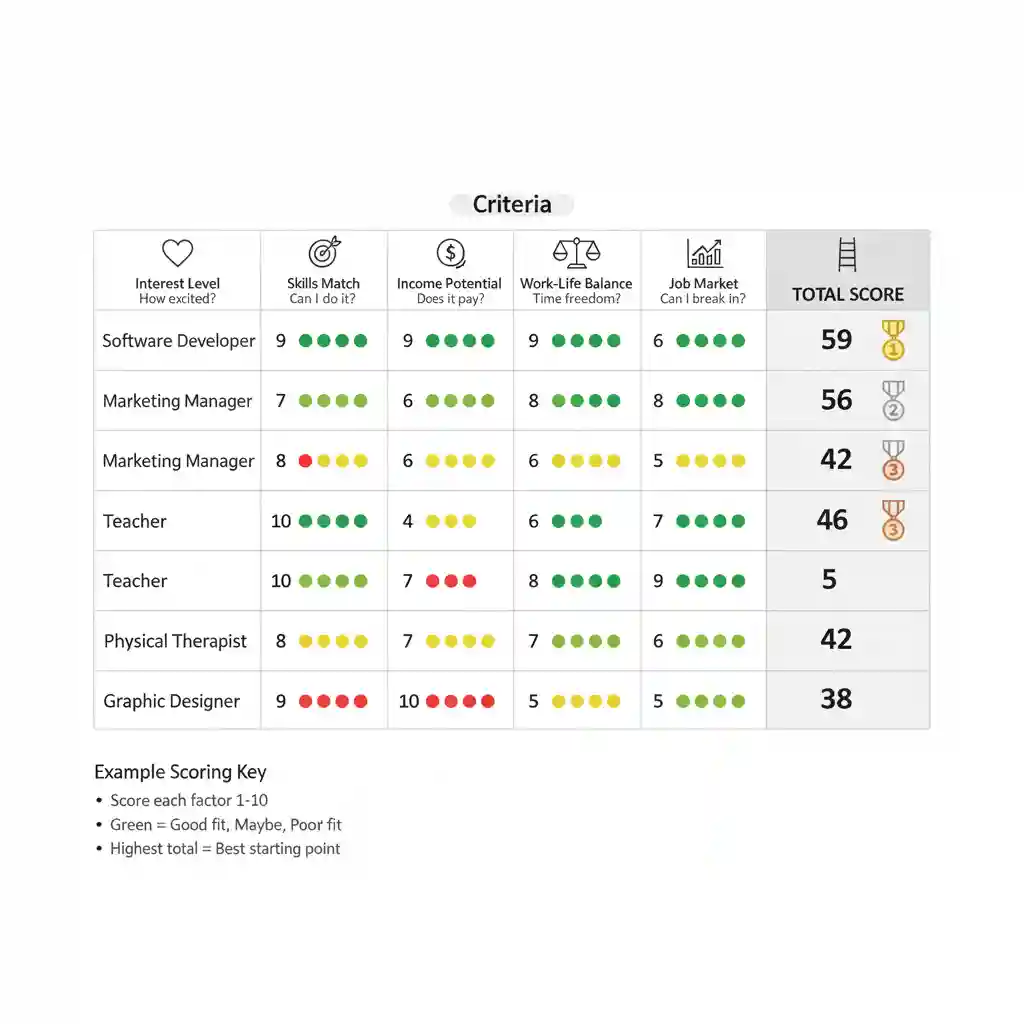
The Career Choice Matrix
Create a simple spreadsheet or table. List your career options down the left side. Across the top, add these criteria:
- Interest (1-10): How excited are you about this?
- Skills Match (1-10): Do you have or can you develop the needed skills?
- Income Potential (1-10): Does it meet your financial needs?
- Work-Life Balance (1-10): Does it fit your lifestyle goals?
- Job Market (1-10): How available are jobs in this field?
- Barrier to Entry (1-10): How feasible is it to break in?
Score each career on each criterion. Add up the scores. The highest scorers are your best bets.
Important: This isn’t about finding the ‘perfect’ career. It’s about identifying which options are most aligned with who you are right now.
Step 4: Test Drive Your Top Choices
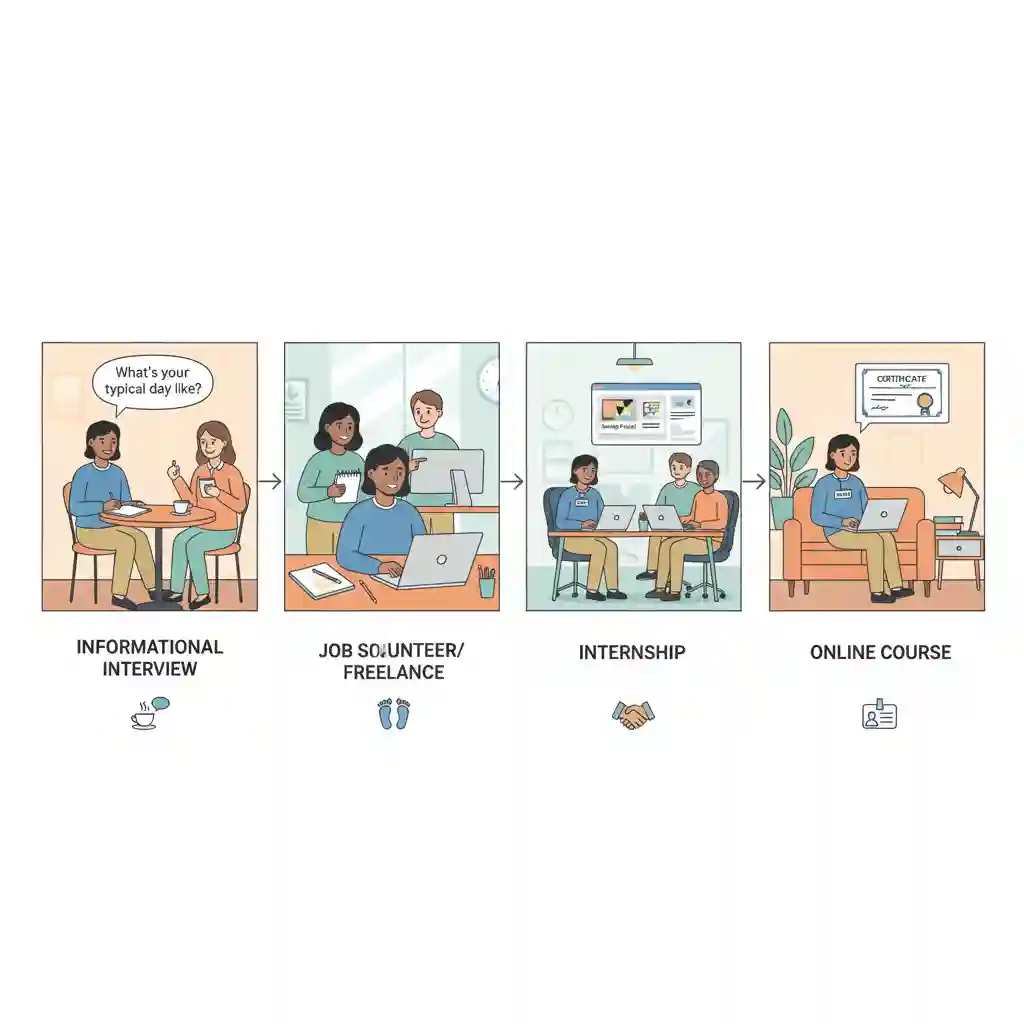
Reading about a career is not the same as doing it. Before you commit to a path, test it. This is the most overlooked step in choosing a career, and it’s the most valuable.
How to Test a Career Without Committing
- Informational Interviews
Find people doing the job and ask them about their experience. Most people are happy to talk for 20-30 minutes. Ask about the parts they don’t show on LinkedIn.
- Job Shadowing
Spend a day (or even a few hours) following someone in the role. You’ll see what they actually do minute by minute.
- Volunteer or Freelance
Take on projects in the field, even unpaid at first. If you’re considering marketing, offer to help a small business. If you’re interested in teaching, volunteer to tutor.
- Internships or Part-Time Work
If possible, get paid experience before fully committing. Even a few months will tell you if you actually like the work.
- Online Courses or Bootcamps
Try the skills on a small scale. Take a coding course, a design workshop, or a writing class. See if you enjoy the actual work.
Why this matters: You might think you want to be a graphic designer until you realize you hate revisions. Or you might think teaching is boring until you actually do it and love it. Testing saves you years.
Step 5: Make a Decision (Even If It’s Scary)
At some point, you have to choose. Analysis paralysis is real, and overthinking will keep you stuck forever.
Here’s the thing about choosing a career: You don’t need 100% certainty. You need 70% confidence and a willingness to adjust if it doesn’t work out.
How to Actually Decide
- Set a deadline: Give yourself a firm date to decide. Without a deadline, you’ll research forever.
- Trust your gut: After all the research, which option keeps coming back to you? Which one excites you even a little?
- Pick the path with lowest regret: If you’re 80 years old looking back, which choice would you regret NOT trying?
- Choose the one with the best ‘next step’: Which career has the clearest, most achievable first step you can take now?
Step 6: Create an Action Plan
Choosing a career is only the beginning. Now you need a plan to actually get there.
Your Career Action Plan Should Include:
- Skills Gap Analysis
What skills do you need that you don’t have yet? List them. Then figure out how to get them (courses, practice, mentorship).
- Education/Training Timeline
Do you need a degree? Certification? Bootcamp? How long will it take? What will it cost? Be realistic.
- Experience Building
How will you get hands-on experience? Internships? Side projects? Volunteer work? Freelancing?
- Network Development
Who do you need to know? Join professional groups, attend events, connect on LinkedIn, find mentors.
- Financial Planning
How will you support yourself during the transition? Savings? Part-time work? Keep current job while learning?
- Milestones and Deadlines
Set specific, dated milestones. “Complete certification by June.” “Land first freelance client by August.” “Apply to 5 jobs by October.”
Common Mistakes When Choosing a Career
Mistake 1: Choosing Based on Money Alone
Yes, money matters. But if you hate what you do, no amount of money will make you happy long-term. Choose something you can tolerate (at minimum) that pays fairly.
Mistake 2: Choosing Based on Someone Else’s Expectations
Your parents’ dream career might be your nightmare. This is your life. Choose what works for YOU, not what impresses other people.
Mistake 3: Waiting for Perfect Clarity
You’ll never have complete certainty. If you wait until you’re 100% sure, you’ll wait forever. Make the best choice with the information you have.
Mistake 4: Ignoring the Day-to-Day Reality
A job title might sound glamorous, but the daily work might be boring. Research what you’ll ACTUALLY be doing, not just what it’s called.
Mistake 5: Not Testing Before Committing
Don’t spend four years and $100K on a degree before you’ve even tried the work. Test first, commit second.
What If You Choose the Wrong Career?
Here’s the good news: there’s no such thing as the ‘wrong’ career. There are just careers that fit you at different stages of life.
If you choose a career and realize it’s not for you, you haven’t failed. You’ve learned something valuable about yourself. That’s progress, not failure.
You can always pivot. People do it all the time:
- Lawyers become writers
- Teachers become corporate trainers
- Engineers become product managers
- Accountants become business owners
The skills and experience you gain in one career almost always transfer to another. Nothing is wasted.
Useful Tools for Choosing a Career
Career Assessment Tools
- Myers-Briggs Type Indicator (MBTI): Personality assessment that suggests career fits
- Holland Code (RIASEC): Matches personality to career environments
- StrengthsFinder: Identifies your top talents
- CliftonStrengths: Detailed strengths assessment
Research Resources
- O*NET Online: Comprehensive career database
- Bureau of Labor Statistics: Job outlook and salary data
- Glassdoor: Company reviews and salary info
- LinkedIn: Job market research and networking
Your Career Choice Checklist
Before you commit to a career path, make sure you can check these boxes:
- I understand my strengths and interests
- I’ve researched at least 5-10 career options
- I know the day-to-day reality of my top choice
- I’ve talked to people actually doing this work
- I’ve tested the work in some way (shadowing, volunteering, course)
- The salary range meets my financial needs
- The work-life balance fits my lifestyle goals
- I have a clear action plan for getting there
- I’m okay with adjusting if it doesn’t work out
- I’m making this choice for ME, not someone else
The Bottom Line on How to Choose a Career
Choosing a career doesn’t have to be this enormous, terrifying decision. Break it down into steps: understand yourself, research options, narrow them down, test them out, and make a choice.
The key is to choose a career based on reality—not fantasies, not other people’s expectations, not what sounds impressive. Choose something that actually fits who you are and what you want from life.
And remember: this isn’t permanent. If you choose a career and it doesn’t work out, you haven’t wasted time. You’ve gained experience, skills, and self-knowledge. All of that helps you make a better choice next time.
So stop overthinking it. Do the work, make a choice, and adjust as you go. That’s how careers actually happen.
Ready to Take the Next Step?
Check out our guides on professional Cover Letters and writing perfect resume.
Discover more from eduhire.blog
Subscribe to get the latest posts sent to your email.