Action Verbs for Resume (200+ Power Words to Get Hired Faster)
Stop using weak verbs like ‘responsible for’ and ‘helped with.’ Here are powerful action verbs for resume bullet points that actually impress recruiters.
Your resume may look good at first glance, but if it’s filled with weak action words for resume, it’s silently hurting your chances of landing an interview. Words like “responsible for,” “helped with,” “worked on,” or “assisted in” are overused and don’t really communicate what you’ve actually accomplished.
The secret to standing out is using strong action verbs for resume bullet points. These powerful resume verbs don’t just impress hiring managers—they also help your resume pass Applicant Tracking Systems (ATS). By using the right action words for resume, you show measurable impact, leadership, and real results, instead of just listing tasks you performed.
In this article, I have compiled over 200+ action verbs for resume, organized by job function, skills, and experience level. Whether you are writing your first resume or you are updating your professional profile, these resume power words will replace weak verbs and elevate your resume.
For more guidance, check out our How to Write a Resume Guide for detailed steps on building an ATS-friendly resume, and our LinkedIn Optimization Guide to ensure your profile complements the strong resume verbs you’re using.
By the end, you’ll know exactly which strong action verbs for resume to use to make recruiters take notice.
Why Action Verbs for Resume Writing Actually Matter
Using strong action verbs for resume isn’t just about sounding professional. It’s about making sure your resume gets read, remembered, and makes a real impact.
- Pass Applicant Tracking Systems (ATS) With Ease
When you use the right action words to use on resume, ATS software picks up on achievement-oriented, active language. This helps your resume rank higher in automated screenings and ensures it reaches the hands of hiring managers. For more tips on crafting ATS-friendly resumes, see our Resume Format Guide. - Grab Recruiters’ Attention Instantly
Hiring managers often skim resumes in seconds. Starting each bullet point with strong action verbs for resume like Achieved, Generated, or Led immediately draws their attention. Using varied resume verbs list ensures your achievements stand out without sounding repetitive. - Highlight Measurable Results
The best action verbs for resume accomplishments allow you to quantify your achievements. For example, “Increased sales by 25%” speaks far louder than “Worked on sales.” Using numbers, percentages, or specific outcomes turns your resume action words list into proof of your capabilities. - Clearly Communicate Your Skills
Strong action words for resume let you show exactly what you did. Whether it’s leadership, technical skills, or customer service, these power verbs for resume make your contributions clear and credible. Learn how to combine them effectively with our Resume Keywords & ATS Guide 2026.
By strategically using strong action verbs in your resume, you move beyond simply listing responsibilities—you demonstrate impact, initiative, and results that recruiters remember.
The Power Verb Formula: How to Write Resume Bullet Points
Before diving into your resume verbs list, it’s important to know how to use them effectively. The most impactful action verbs for resume achievements follow a simple formula:
Action Verb + What You Achieved + Measurable Result
Weak Example (no action verb):
- Responsible for managing social media accounts
Strong Example (using strong action verbs for resume with measurable results):
- Grew social media following by 250% in 6 months through a data-driven content strategy
See the difference? Starting with a power verb for resume immediately shows impact, and including measurable results makes your accomplishment tangible. This approach ensures your bullet points don’t just tell—they prove.
Using action words to use on resume in this way also helps your resume pass ATS systems, making it easier for recruiters to notice your contributions. By writing your bullet points with strong action words for resume, you’re turning a list of tasks into a compelling story of achievements.
For more guidance on structuring your resume, check out our Resume Format Guide and What to Include in a Resume.
Now, let’s explore the comprehensive resume action words list to make your resume stand out and get noticed.
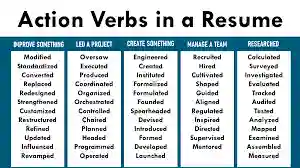
Action Verbs for Resume: Leadership & Management Positions
When you’re applying for management positions, your resume needs to do more than list duties. It should show your leadership and the real impact you’ve made. Using the right strong action verbs for resume can make your bullet points stand out, showing hiring managers that you don’t just lead—you achieve results.
Team Leadership
When highlighting leadership skills, choose action words for resume that reflect guidance and influence. Words like:
Led, Directed, Managed, Supervised, Coordinated, Oversaw, Mentored, Coached, Guided, Trained, Developed, Built, Established, Organized, Delegated, Empowered, Motivated, Inspired, Spearheaded, Championed
These resume power words do more than describe tasks—they tell a story about how you inspire and develop people, manage teams, and take responsibility for results. For example, instead of saying “Responsible for a team of 10,” you could say:
Mentored a team of 10 junior associates, helping 3 secure promotions within a year.
Strategic Planning
Management isn’t just about people—it’s also about vision and execution. Use strong verbs for resume like:
Strategized, Planned, Envisioned, Forecasted, Orchestrated, Executed, Launched, Pioneered, Transformed, Restructured, Revitalized, Modernized, Streamlined, Optimized, Aligned
These action verbs for resume show you don’t just “do work”—you improve processes, solve problems, and drive measurable results. For instance:
Orchestrated a departmental restructuring that improved operational efficiency by 35%.
Example for Management Roles
- Led a cross-functional team of 12 to deliver a $2M project three weeks ahead of schedule
- Directed strategic initiatives that increased efficiency by 35%
- Mentored 8 junior team members, resulting in 3 promotions within 18 months
By using these action words for resume from your resume verbs list, your bullet points will feel alive and human. They demonstrate not just what you did, but the tangible results you achieved and the leadership you brought to the table.
Action Verbs for Resume Accomplishments and Results
For sales and marketing roles, using the right action verbs for resume can make your bullet points pop and show real results. The goal is to demonstrate how you drove revenue, built brands, and engaged customers.
Sales Performance:
- Closed, Converted, Negotiated, Pitched, Sold, Persuaded, Influenced, Secured, Captured, Landed, Won, Cultivated, Exceeded, Outperformed
Marketing & Brand:
- Launched, Promoted, Marketed, Branded, Positioned, Campaigned, Publicized, Advertised, Showcased, Highlighted, Drove, Attracted, Engaged, Converted
Customer Relations:
- Built, Strengthened, Fostered, Nurtured, Maintained, Retained, Resolved, Serviced, Supported
Examples:
- Closed $2.3M in new business deals, exceeding quota by 185%
- Launched a digital marketing campaign that generated 450 qualified leads
- Built strategic partnerships with 15 enterprise clients worth $5M annually
By using these resume action words, you immediately show results, influence, and leadership. You’re no longer just “responsible for sales”—you’re someone who drove measurable impact.
For guidance on making your achievements shine on your resume, check out our Action Verbs for Resume: Leadership & Management Positions and How to Prepare for an Interview.
Action Verbs for Resume: Sales and Marketing Professionals
If you work in sales or marketing, your resume shouldn’t just list what you were “responsible for.” Hiring managers want to see real impact—the deals you closed, the campaigns you drove, the relationships you nurtured. That’s where the right strong action verbs for resume come in. They turn ordinary bullet points into compelling stories that get noticed.
Sales Performance
When you’re showing sales achievements, pick action words for resume that emphasize results, persuasion, and action. Words like:
Closed, Converted, Negotiated, Pitched, Sold, Persuaded, Influenced, Secured, Captured, Landed, Won, Cultivated, Exceeded, Outperformed
For instance, instead of writing:
“Responsible for meeting sales targets.”
Try something like:
Closed $2.3M in new business deals, surpassing quota by 185%.
That one line tells a recruiter not just what you did, but how well you did it, making your achievements clear and impactful. That’s the power of using strong action verbs for resume effectively.
Marketing & Brand
Marketing resumes need to showcase campaigns, brand growth, and engagement. Use your resume verbs list to bring energy to your accomplishments:
Launched, Promoted, Marketed, Branded, Positioned, Campaigned, Publicized, Advertised, Showcased, Highlighted, Drove, Attracted, Engaged, Converted
For example:
Launched a digital marketing campaign that generated 450 qualified leads in just three months.
Using resume power words like “Launched” or “Drove” instantly makes your achievements measurable and results-focused, instead of just describing tasks.
Customer Relations
Great sales and marketing professionals know it’s not just about numbers—it’s about people. Use action words for resume to show how you foster relationships and maintain client loyalty:
Built, Strengthened, Fostered, Nurtured, Maintained, Retained, Resolved, Serviced, Supported
Example:
Built strategic partnerships with 15 enterprise clients, generating $5M in annual revenue.
These strong verbs for resume show that you don’t just sell or market—you create value and build lasting connections.
By carefully using these action words for resume, your bullet points will not only pass Applicant Tracking Systems but also catch a recruiter’s eye immediately. Each line communicates what you achieved, how you did it, and the impact you made—making your resume compelling, human, and results-driven.
Action Verbs for Resume: IT Professionals and Technical Roles
If you work in IT or technical roles, your resume needs to show more than just your job duties. Recruiters want to see the impact of your work—how you engineered solutions, fixed problems, and improved systems. That’s where the right strong action verbs for resume make a huge difference.
Development & Engineering
For developers, engineers, and programmers, use action words for resume that demonstrate your technical skills and results:
Engineered, Developed, Programmed, Coded, Built, Created, Designed, Architected, Integrated, Implemented, Deployed, Automated, Configured, Customized
Instead of:
“Responsible for developing APIs.”
Try something like:
Engineered a scalable API handling 10M requests daily with 99.9% uptime.
This use of strong verbs for resume instantly shows your impact and technical expertise.
System & Infrastructure
When managing systems or IT infrastructure, your resume verbs list should highlight problem-solving, maintenance, and optimization:
Maintained, Monitored, Administered, Managed, Upgraded, Migrated, Optimized, Secured, Troubleshot, Debugged, Resolved, Fixed
Example:
Automated the deployment process, reducing release time from 4 hours to 15 minutes.
Using action words for resume like “Automated” and “Optimized” makes your achievements concrete and measurable.
Testing & Quality
For QA, testing, or auditing roles, choose resume power words that communicate precision and reliability:
Tested, Validated, Verified, Evaluated, Assessed, Audited, Reviewed
Example:
Resolved critical system vulnerabilities, improving security score by 45%.
This is a clear way to use strong action verbs for resume to show measurable results and demonstrate responsibility.
By weaving these action words for resume into your bullet points, your IT resume doesn’t just list what you did—it shows what you accomplished, how you did it, and the real-world impact of your work. That makes your resume stand out to both ATS systems and hiring managers.
Action Verbs for Resume: Analysis and Research
For roles in analytics, research, or data-driven positions, your resume should show not just what you did, but the insights and impact you delivered. Using the right strong action verbs for resume helps hiring managers and ATS systems quickly see your value.
Data & Analysis
When describing analytical tasks, use action words for resume that highlight evaluation, measurement, and investigation:
Analyzed, Evaluated, Assessed, Examined, Investigated, Researched, Studied, Explored, Surveyed, Reviewed, Audited, Measured, Quantified, Calculated, Forecasted
Instead of:
“Responsible for analyzing customer data.”
Try something like:
Analyzed customer behavior data to uncover a $2M revenue opportunity.
This shows your ability to drive results using your analytical skills and makes your bullet points measurable and engaging.
Insights & Reporting
When your work involves presenting findings or creating reports, your resume verbs list should show how you translate data into actionable insights:
Identified, Discovered, Uncovered, Revealed, Determined, Diagnosed, Interpreted, Translated, Visualized, Presented, Reported, Documented
Example:
Identified cost-saving measures through financial analysis, reducing expenses by 22%.
Using resume power words like “Identified” or “Discovered” demonstrates initiative and impact, not just activity.
Analysis Examples
Bringing it all together, here’s how your bullet points can read with measurable outcomes and strong action:
- Forecasted market trends with 92% accuracy using predictive modeling.
- Reviewed operational data to uncover inefficiencies, saving 150 work hours monthly.
- Documented research findings and presented actionable recommendations to senior management.
These strong action verbs for resume instantly convey that you don’t just work with data—you turn it into insights that drive decisions and business results.
Action Verbs for Resume: Communication and Writing
Let’s be honest—everyone says they’re a “good communicator” on their resume. But that line doesn’t tell a hiring manager anything. To really stand out, you need to show what you actually did, and the results you achieved. That’s where strong action verbs for resume come in.
Written Communication
When your work involves writing—whether reports, articles, or documentation—don’t just say you “wrote reports.” Use action words for resume that show your work had an impact:
Authored, Wrote, Composed, Drafted, Edited, Published, Documented, Scripted, Crafted, Produced, Created
For example, instead of:
“Responsible for writing technical articles.”
You could write:
Authored over 50 technical articles that reached 200K readers every month.
See the difference? You’re not just describing a task—you’re showing measurable impact. That’s what resume power words do—they turn ordinary bullet points into compelling achievements.
Verbal Communication
Similarly, for presentations, meetings, or negotiations, use strong verbs for resume that show influence and leadership:
Presented, Communicated, Articulated, Conveyed, Delivered, Pitched, Negotiated, Facilitated, Moderated, Mediated, Consulted, Advised, Counseled
Instead of:
“Gave presentations to executives.”
Try:
Presented quarterly business reviews to C-level executives and board members, shaping key decisions.
Or:
Negotiated contracts worth $3M, achieving 95% favorable terms.
By choosing the right action words for resume, you’re not just listing tasks—you’re showing that your communication skills led to real results. Hiring managers can instantly see that you take initiative, solve problems, and influence outcomes.
Using these resume verbs list naturally in your bullet points turns your resume from a boring task list into a story of what you accomplished. It proves you’re not just doing a job—you’re making an impact.
Action Verbs for Resume: Creative and Design Roles
If you work in creative or design fields, your resume should do more than list tasks—it should show your imagination, innovation, and impact. Using the right strong action verbs for resume can instantly make your accomplishments pop.
Design & Creation
When highlighting your design work, focus on verbs that demonstrate what you actually built or created. Words like:
Designed, Created, Developed, Conceptualized, Illustrated, Crafted, Produced, Composed, Styled, Rendered, Prototyped, Animated
Instead of writing:
“Worked on client design projects.”
Try:
Designed brand identity for 30+ clients, boosting their market recognition by 60%.
Or:
Illustrated over 100 digital assets for an award-winning mobile application.
These action words for resume show your work had measurable results and real-world impact.
Innovation & Vision
Creative roles also demand forward-thinking. Use verbs that highlight innovation and strategic vision:
Envisioned, Innovated, Reimagined, Revolutionized, Pioneered, Invented, Originated
Example:
Conceptualized a marketing campaign that generated 2M impressions in just two weeks.
Or:
Pioneered a new visual storytelling style that became the standard across multiple campaigns.
Using these resume power words turns your bullet points into clear stories of creativity and achievement—showing hiring managers that you don’t just create, you innovate.
By weaving strong verbs for resume naturally into your creative accomplishments, your resume will feel alive and demonstrate both skill and results.
Action Verbs for Resume: Customer Service Jobs
Working in customer service means more than just answering calls or replying to emails. Your resume should show how you solved problems, built relationships, and delivered results. Using the right strong action verbs for resume helps you do exactly that.
Customer Support
When highlighting your support experience, choose action words for resume that show you actively helped and guided customers:
Assisted, Helped, Supported, Served, Resolved, Addressed, Handled, Managed, Responded, Answered, Troubleshot, Guided
Instead of:
“Handled customer inquiries.”
Try:
Resolved 95% of customer issues on first contact, exceeding company targets.
Or:
Maintained a 4.9 out of 5 customer satisfaction rating across 2,000+ interactions.
These resume power words clearly demonstrate your problem-solving ability and efficiency, rather than just listing duties.
Relationship Building
Customer service isn’t only about solving problems—it’s about creating lasting connections. Use verbs that highlight how you fostered strong relationships:
Cultivated, Developed, Strengthened, Enhanced, Improved, Maintained, Built, Fostered, Retained
For example:
Cultivated relationships with 50+ enterprise accounts, generating $2M in annual revenue.
Or:
Strengthened client partnerships through regular check-ins and proactive support, boosting retention by 30%.
When you combine these strong verbs for resume with measurable results, your bullet points don’t just show experience—they tell a story of impact. Hiring managers instantly see that you don’t just answer questions—you create solutions and drive customer satisfaction.
Action Verbs for Resume: Finance and Operations
Working in finance or operations is about precision, strategy, and making processes run smoothly. To make your resume stand out, it’s not enough to just list your responsibilities—you need strong action verbs for resume that show measurable results and leadership.
Financial Management
For budgeting, auditing, and tracking finances, choose action words for resume that highlight your ability to manage money wisely:
Budgeted, Allocated, Forecasted, Projected, Analyzed, Audited, Reconciled, Tracked, Monitored, Controlled, Administered, Managed
Instead of:
“Responsible for managing company budget.”
Try:
Managed a $5M annual budget with zero variance to forecast, ensuring financial targets were met.
Or:
Reconciled over 1,000 accounts monthly with 99.8% accuracy.
These resume power words show hiring managers that you’re not just doing tasks—you’re driving financial accuracy and accountability.
Process & Operations
Operations professionals should emphasize efficiency and process improvement. Use strong verbs for resume that show how you optimized workflows:
Streamlined, Optimized, Systematized, Standardized, Coordinated, Organized, Scheduled, Planned, Executed, Implemented, Processed
For example:
Streamlined invoice processing, reducing cycle time from 7 days to 2 days.
Or:
Implemented a new workflow system that improved team productivity by 30%.
By pairing action words for resume with tangible results, your bullet points demonstrate impact. Hiring managers can immediately see that you’re not just managing tasks—you’re improving systems, saving time, and contributing to the company’s bottom line.
Action Verbs for Resume: Fresh Graduates and Students With No Experience
If you’re a student or fresh graduate with limited work experience, use these action verbs for resume content:
Learning & Development:
Learned, Studied, Mastered, Trained, Completed, Gained, Acquired, Developed, Enhanced, Strengthened
Projects & Initiatives:
Created, Built, Designed, Developed, Organized, Coordinated, Planned, Executed, Launched, Contributed, Participated, Collaborated
Examples for students and fresh graduates:
Developed mobile app as senior capstone project used by 500+ students Collaborated with team of 5 to create marketing campaign for local nonprofit Mastered Python, JavaScript, and SQL through coursework and personal projects
Action Verbs for Resume Summary and Objective
Your resume summary is often the first thing recruiters read, so it needs to grab attention immediately. Using strong action verbs for resume in this section shows that you’re not just listing your title—you’re demonstrating expertise, achievements, and credibility.
Professional Identity
Highlight your skills and accomplishments using verbs that establish authority and experience:
Specialized, Experienced, Certified, Skilled, Expert, Accomplished, Proven, Seasoned
Instead of a plain summary like:
“Marketing manager with experience in B2B digital strategy.”
Try:
Accomplished marketing manager specializing in B2B digital strategy, delivering measurable growth across multiple campaigns.
Or:
Experienced software engineer with a proven track record of building scalable solutions for enterprise clients.
Or:
Certified project manager skilled in Agile methodology and adept at coordinating cross-functional teams.
By integrating action words for resume here, your summary immediately signals to hiring managers that you’re results-driven and capable of making an impact. These resume power words make your profile memorable, increasing the likelihood of being called for an interview.
Weak Verbs to Avoid (And What to Use Instead)
A lot of resumes fail because they’re full of weak, overused action words for resume that tell hiring managers very little. Using the right strong action verbs for resume can completely change how your experience is perceived. Here’s a guide on which words to ditch—and what to use instead.
1. Never use “Responsible for”
This phrase is the most common culprit. It doesn’t show what you actually accomplished. Instead, choose strong verbs for resume that demonstrate leadership and impact:
Led, Managed, Oversaw, Directed, Coordinated, Executed, Delivered
Example:
Weak: Responsible for managing team projects.
Strong: Directed a cross-functional team to deliver 5 projects ahead of schedule.
2. Avoid “Helped with”
Too vague—recruiters want to see your direct contribution. Swap it with action verbs for resume that show collaboration and support:
Contributed, Supported, Assisted, Facilitated, Enabled, Collaborated
Example:
Weak: Helped with client onboarding.
Strong: Facilitated client onboarding, reducing setup time by 30%.
3. Don’t say “Worked on”
This tells nothing about results. Use resume power words that highlight creation and achievement:
Developed, Created, Built, Designed, Implemented, Executed
Example:
Weak: Worked on marketing campaigns.
Strong: Designed and executed a social media campaign that generated 2,000 leads.
4. Skip “Was responsible for”
Even worse than “Responsible for.” Replace it with strong action verbs for resume that show ownership:
Managed, Led, Directed, Supervised, Controlled
Example:
Weak: Was responsible for inventory management.
Strong: Managed inventory operations, reducing stock discrepancies by 25%.
5. Eliminate “Duties included”
This lists tasks rather than accomplishments. Swap with achievement-focused resume verbs list:
Achieved, Delivered, Generated, Increased, Improved
Example:
Weak: Duties included tracking sales performance.
Strong: Generated weekly sales reports, helping the team exceed targets by 15%.
By replacing weak verbs with strong action verbs for resume, you transform bullet points from bland duties into compelling stories of impact. Hiring managers and ATS systems both notice the difference, increasing your chances of landing the interview.
Before and After: Weak Verbs vs Powerful Action Verbs
Understanding the difference between weak verbs and strong action verbs for resume can completely change how your resume is perceived. Using the right action words for resume not only makes your accomplishments stand out but also helps your resume pass Applicant Tracking Systems (ATS). Let’s see some examples across different job roles.
Marketing Professional
Before (weak verbs):
- Responsible for social media accounts
- Helped with email marketing campaigns
- Worked on content creation
After (using strong action verbs for resume):
- Grew Instagram following from 5K to 50K in 8 months using a data-driven content strategy
- Launched an email nurture campaign generating 300 qualified leads monthly
- Produced 100+ blog posts ranking on the first page of Google for target keywords
IT Professional
Before (weak verbs):
- Responsible for maintaining servers
- Helped fix technical issues
- Worked on system upgrades
After (using powerful action verbs for resume with measurable results):
- Maintained 50+ production servers achieving 99.9% uptime over 18 months
- Resolved 200+ critical technical issues with an average response time under 2 hours
- Migrated legacy systems to cloud infrastructure, reducing costs by $150K annually
Sales Professional
Before (weak verbs):
- Responsible for managing client accounts
- Helped increase sales numbers
- Worked with sales team
After (using strong action verbs for resume bullet points):
- Managed a portfolio of 75 enterprise accounts generating $5M in annual revenue
- Exceeded sales quota by 200% for three consecutive quarters
- Collaborated with cross-functional teams to close a $2M deal, the largest in company history
These examples show how action verbs for resume, when paired with measurable results, turn ordinary job descriptions into achievement-driven statements. By replacing weak verbs with strong action verbs, your resume demonstrates impact, leadership, and results—exactly what recruiters and ATS systems are looking for.
How to Choose the Right Action Verbs for Your Resume
With over 200 resume power words at your disposal, picking the right ones can feel overwhelming. The key is to choose action verbs for resume that not only highlight your achievements but also help your resume get noticed by recruiters and pass Applicant Tracking Systems (ATS). Here’s how to make smart choices:
1. Match the Job Description
Carefully review the job posting and notice the action words they use. If the posting says “developed,” then use developed rather than created. Using the same language ensures your resume passes ATS filters and resonates with hiring managers. Choosing action verbs for resume bullet points that mirror the job description increases your chances of getting noticed.
2. Be Truthful and Specific
Never exaggerate. Don’t write led if you didn’t actually lead a team. If you contributed to a project, consider verbs like collaborated, supported, or assisted. Being honest builds credibility and makes your resume feel genuine. Using precise resume verbs also helps clearly communicate your accomplishments.
3. Use Varied Verbs
Avoid starting every bullet with the same word like managed or developed. Mixing in different strong action verbs for resume keeps your resume engaging and demonstrates the full scope of your skills. A varied resume verbs list shows recruiters that you’re versatile and results-driven.
4. Choose Verbs That Show Impact
Prioritize power verbs for resume that emphasize measurable results and achievements. Words like increased, improved, generated, achieved, and delivered immediately show the difference you made. When your bullet points are built with strong action verbs for resume, they communicate not just what you did, but the real impact of your work.
By thoughtfully selecting the right action words for resume, you turn ordinary job duties into compelling accomplishments. A resume filled with carefully chosen strong action verbs will stand out to both ATS software and recruiters, improving your chances of landing interviews.
Common Mistakes When Using Resume Action Verbs
Even if you’ve got a list of strong action verbs for resume, it’s easy to make mistakes that can weaken your resume. Avoid these common pitfalls:
1. Using the Same Verb Repeatedly
Starting every bullet with managed or developed quickly makes your resume feel repetitive. Mix in other resume verbs from your resume verbs list to keep each accomplishment fresh and impactful. Variety helps your achievements stand out to both recruiters and ATS.
2. Choosing Verbs Without Showing Results
A bullet like “Coordinated meetings” doesn’t tell a hiring manager much. Instead, try something like:
“Coordinated weekly strategy meetings with 12 stakeholders, improving project delivery time by 25%.”
Using strong action verbs for resume bullet points alongside measurable outcomes communicates real impact and makes your accomplishments shine.
3. Using Verbs That Don’t Match Your Level
If you’re entry-level, don’t overstate your experience by claiming you spearheaded or orchestrated major initiatives. Stick to good action verbs for resume that reflect your actual contributions. Honesty ensures your resume feels credible while still showing your abilities.
4. Forgetting About ATS
Some creative action words for resume may not be recognized by Applicant Tracking Systems. Use strong action verbs for resume content that are clear and straightforward. This ensures both humans and software understand your achievements and skills.
By being mindful of these mistakes and using power verbs for resume effectively, your resume can communicate your accomplishments clearly, pass ATS screenings, and impress recruiters.
Quick Reference: Best Action Verbs by Job Type
Picking the right action verbs for your resume isn’t just about sounding professional—it’s about showing real impact and results. Using strong, targeted action words for resume bullet points helps your experience stand out to both hiring managers and ATS software. Here’s a friendly guide to make it easier.
Management Roles
When you’re leading a team or managing projects, you want verbs that convey authority and results:
Led, Directed, Supervised, Managed, Coordinated, Developed, Built
These strong action verbs for resume show recruiters that you weren’t just present—you drove results, guided your team, and got things done.
Sales Positions
For sales roles, highlight your wins and measurable achievements:
Closed, Exceeded, Generated, Secured, Negotiated, Converted, Won
These action words for resume tell employers you don’t just “work with clients”—you deliver revenue and smash targets.
Marketing Roles
Marketing is all about creativity and measurable results. Use verbs like:
Launched, Grew, Increased, Developed, Created, Drove, Optimized
These resume power words show that your campaigns had a real impact, from driving leads to boosting engagement.
IT and Technical Roles
For technical positions, choose verbs that demonstrate problem-solving and hands-on skills:
Engineered, Developed, Implemented, Automated, Optimized, Resolved, Deployed
The right resume verbs for technical roles let recruiters see that you can build, improve, and maintain systems efficiently.
Customer Service Positions
Customer service is about people, problem-solving, and results:
Resolved, Maintained, Improved, Achieved, Supported, Enhanced, Delivered
These action words for resume show that you go beyond handling inquiries—you create excellent experiences and long-term relationships.
Finance and Operations
Finance and operations roles require precision and process improvement:
Managed, Analyzed, Reduced, Forecasted, Audited, Reconciled, Controlled
Using these resume action verbs highlights that you can handle budgets, optimize processes, and make decisions that drive results.
Creative and Design Roles
If your work is creative, your verbs should reflect imagination and tangible output:
Designed, Created, Developed, Conceptualized, Produced, Crafted, Illustrated
These action verbs for resume show that you’re not just thinking creatively—you’re delivering projects that get noticed.
Entry-Level Positions
Even without years of experience, you can make your resume shine:
Contributed, Supported, Assisted, Collaborated, Developed, Created, Learned
These good action verbs for resume highlight initiative, teamwork, and your potential to grow quickly in a role.
Pro Tip: Mix these resume verbs throughout your bullet points. Don’t start every line with “Managed” or “Created.” Variety keeps your resume fresh, shows the breadth of your skills, and makes each accomplishment memorable.
Frequently Asked Questions About Resume Action Verbs
How many action verbs should I use on my resume?
Use one strong action verb at the start of each bullet point. If you have 15 bullet points across your work experience, you’ll use 15 different action verbs. Try not to repeat the same verb more than twice on your entire resume.
Should I use different action verbs for different jobs?
Yes. Customize your resume action words to match the job description. If the posting uses specific verbs like ‘developed’ or ‘managed’, use those same words in your resume. This helps you pass ATS systems.
Can I use the same action verb more than once?
You can use the same powerful action verb twice if necessary, but not more than that. If you find yourself using the same verb three or more times, look at the resume verbs list in this guide and pick alternatives.
What if I don’t have measurable results for my achievements?
Use action verbs that focus on skills and activities: Developed, Created, Managed, Coordinated, Supported. Then add context about what you did and how it helped, even if you can’t quantify it with numbers.
Are some action verbs better for passing ATS systems?
Standard, straightforward verbs work best for ATS. Words like Managed, Developed, Increased, Led, Created are universally recognized. Very creative or uncommon verbs might not scan as well in applicant tracking systems.
Should entry level candidates use different action verbs?
Yes. Fresh graduates and students with no experience should use action verbs like Contributed, Collaborated, Assisted, Learned, Developed, Created. These are honest about your level while still showing initiative and accomplishment.
How do I make my resume stand out with action verbs?
Choose specific, powerful action verbs and pair them with measurable results. Instead of ‘Managed social media’, say ‘Grew social media following by 300% in 6 months’. The combination of strong verb plus specific outcome makes you memorable.
What’s the biggest mistake people make with action verbs?
Using ‘responsible for’ instead of real action verbs. This phrase is passive and weak. Replace it with active verbs like Led, Managed, Directed, Coordinated, Executed. Show what you did, not just what you were responsible for doing.
Can I use action verbs in my resume summary?
Yes. Your resume summary should include powerful action verbs too. Use verbs like Specialized, Experienced, Accomplished, Proven, Skilled to describe your professional identity and capabilities.
Start Crafting Your Resume with Powerful Action Verbs Today
You now have a list of 200+ action verbs for resume that actually make a difference. Stop relying on weak phrases like “responsible for” or “helped with”. Instead, use strong action verbs for resume that showcase your accomplishments, leadership, and measurable impact.
The formula is simple and effective:
- Pick a strong action verb from this guide.
- Add what you did—the specific task, project, or responsibility.
- Include measurable results whenever possible.
Always remember to customize your resume action words for each job application. Match your verbs with those in the job posting. This not only helps your resume pass ATS systems but also shows recruiters that you paid attention and understand the role.
Consider the difference:
- Weak: “Responsible for managing projects”
- Strong: “Led 5 cross-functional projects, delivering $2M in value”
The second version uses powerful action verbs for resume bullet points, communicates measurable results, and immediately grabs attention. That’s the difference between a resume that gets ignored and one that lands interviews.
Start using these action words for resume today, and transform your resume into a tool that truly demonstrates your achievements, skills, and potential.
Ready to Write Your Resume?
Also Check: Resume Keywords: 7 Secrets to Beat ATS Rejections and Get 3X More Interviews
Discover more from eduhire.blog
Subscribe to get the latest posts sent to your email.