
How to Study Effectively: 12 Proven Techniques That Boost Learning
Stop wasting hours rereading your notes. Here’s what science says about studying smarter, not harder.
Let’s be honest: most of us were never actually taught how to study. Don’t worry, i’m here to guide you on How to Study Effectively.
We figured out some system in high school—probably just rereading our notes the night before—and stuck with it. Maybe it worked okay. Maybe it didn’t. But we never really questioned whether there was a better way.
Here’s the thing: there is. Scientists have spent decades figuring out how memory actually works and what study methods are most effective. And spoiler alert—most people are doing it wrong.
Rereading your notes? Highlighting everything? Studying one subject for hours straight? All pretty ineffective. The techniques that actually work feel harder in the moment, which is why most people avoid them. But they’re the difference between cramming all night and actually remembering stuff long-term.
So let’s talk about what actually works.
Why Most Study Methods Fail
Before we get to what works, let’s talk about why so many common study habits don’t.
The problem is something called “fluency illusion.” When you reread your notes, they start to feel familiar. Your brain recognizes the information, and that recognition tricks you into thinking you’ve learned it. But recognition isn’t the same as recall.
Think about it: you can recognize a song after hearing one note, but that doesn’t mean you could sing it from memory. Studying is the same. Just because something feels familiar doesn’t mean you actually know it.
The most common ineffective study methods:
- Rereading notes or textbooks: Creates familiarity, not understanding
- Highlighting everything: Passive, doesn’t engage your brain
- Cramming the night before: Gets info into short-term memory, gone by next week
- Studying one subject for hours: Your brain gets tired and stops retaining info
The techniques that actually work require more mental effort upfront, but they save you massive amounts of time in the long run because you actually remember what you study.
12 Study Techniques That Actually Work
1. Active Recall: Test Yourself Constantly
This is the single most powerful study technique, backed by tons of research. Instead of reviewing material, actively try to retrieve it from memory.
How to do it:
- After reading a section, close the book and write down everything you remember
- Use flashcards (but make yourself retrieve the answer before flipping)
- Take practice tests even before you feel ready
- Explain concepts out loud without looking at notes
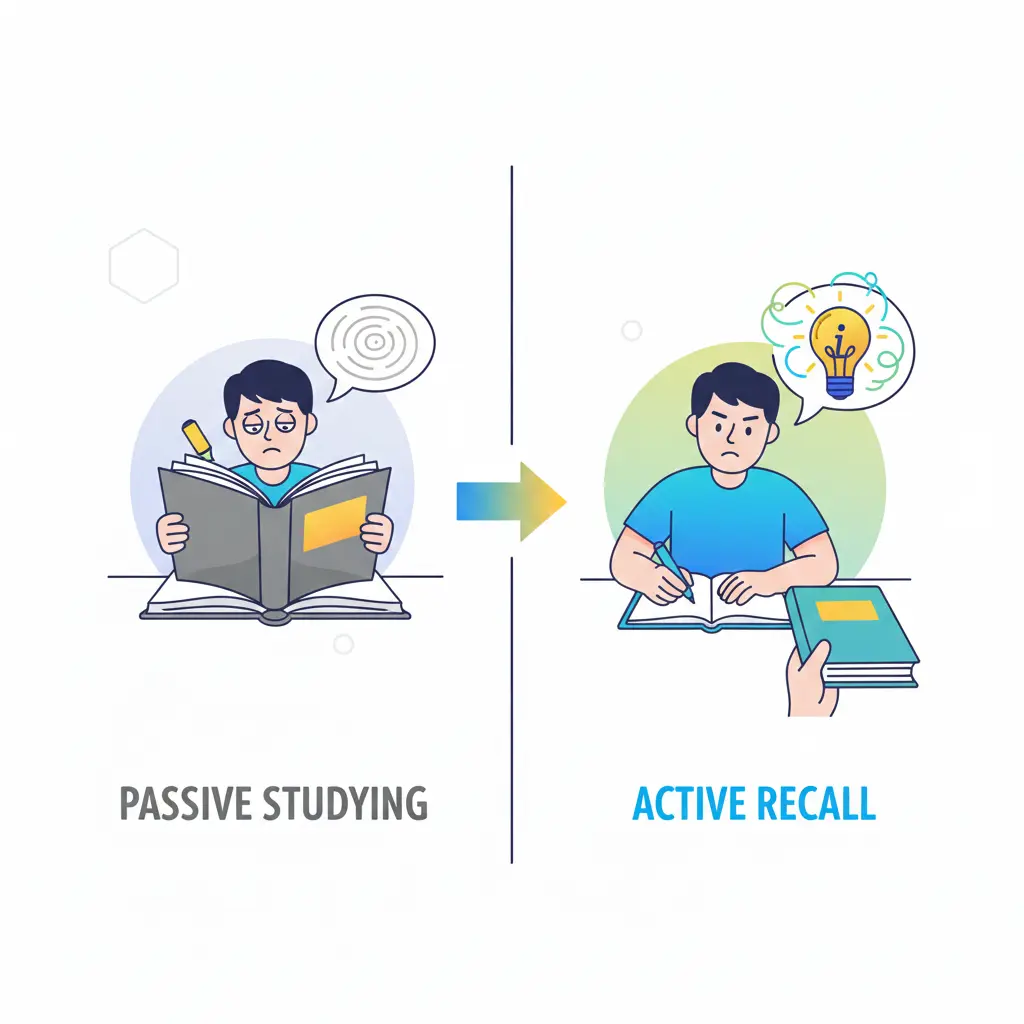
Why it works: The act of retrieving information strengthens the memory pathway. The harder you have to work to remember something, the stronger that memory becomes.
Yes, it feels harder than just rereading. That’s the point. If it feels easy, you’re probably not learning much.
2. Spaced Repetition: Study Over Time, Not All at Once
Your brain forgets things on a predictable curve. Spaced repetition means reviewing material at increasing intervals to fight that forgetting curve.
The ideal review schedule:
- First review: 1 day after learning
- Second review: 3 days later
- Third review: 1 week later
- Fourth review: 2 weeks later, then monthly
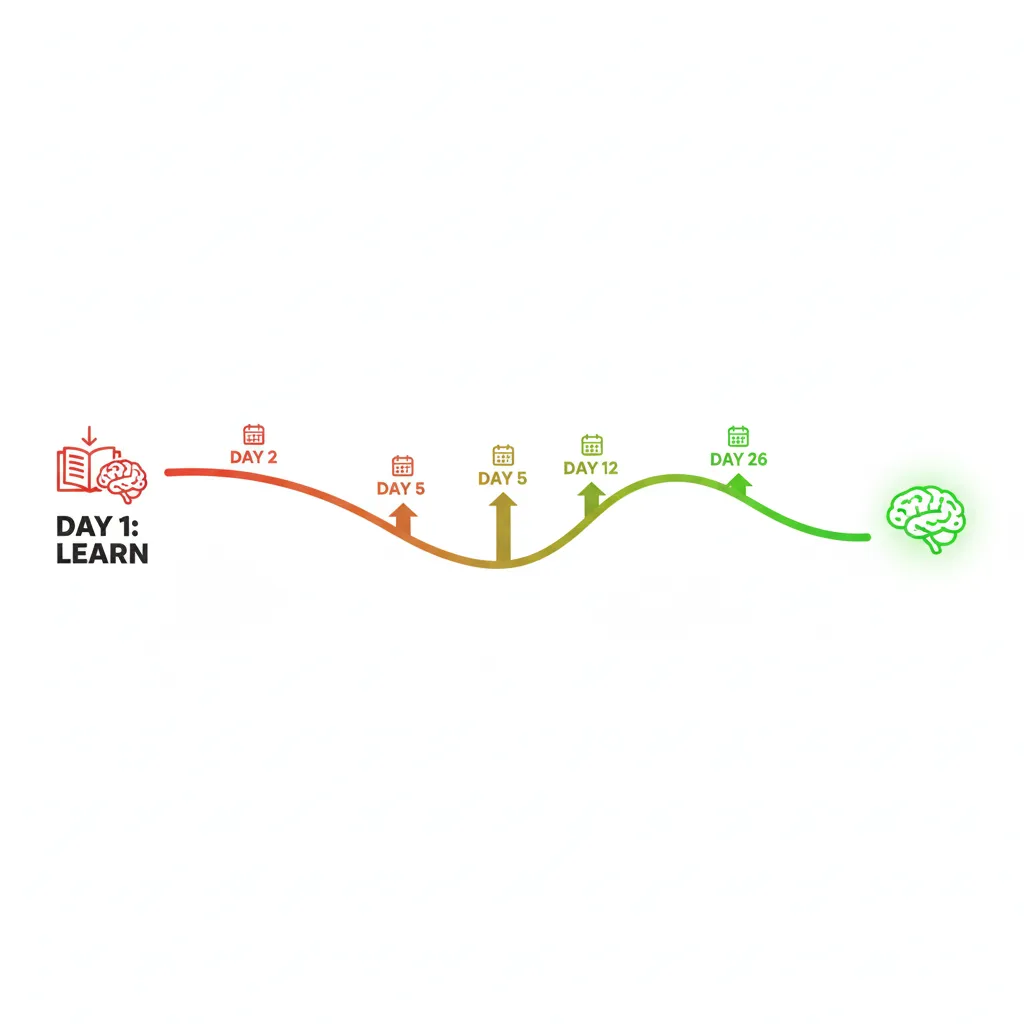
Apps like Anki automate this for you, but you can do it manually with a calendar too. The key is spacing out your reviews instead of cramming everything into one session.
3. The Feynman Technique: Explain It Like You’re Teaching
Named after physicist Richard Feynman, this technique forces you to truly understand something by explaining it simply.
The process:
- Pick a concept you’re studying
- Explain it out loud as if teaching it to a 12-year-old
- Notice where you struggle or use complicated jargon
- Go back and relearn those specific parts
If you can’t explain it simply, you don’t understand it well enough. This technique exposes your knowledge gaps fast.
4. Interleaving: Mix Up Your Subjects
Instead of studying one subject for hours, switch between different subjects or different types of problems within a subject.
Example:
- Bad: Study calculus for 3 hours straight
- Good: Study calculus for 45 min, switch to biology for 45 min, then chemistry for 45 min
Why it works: Your brain has to work harder to switch contexts, which strengthens learning. Plus, you stay fresher and more engaged.
For math, mix up problem types instead of doing 20 of the same type in a row. It’s harder, but you’ll learn the concepts better.
Check out the study of University of North Carolina at Chapel Hills.
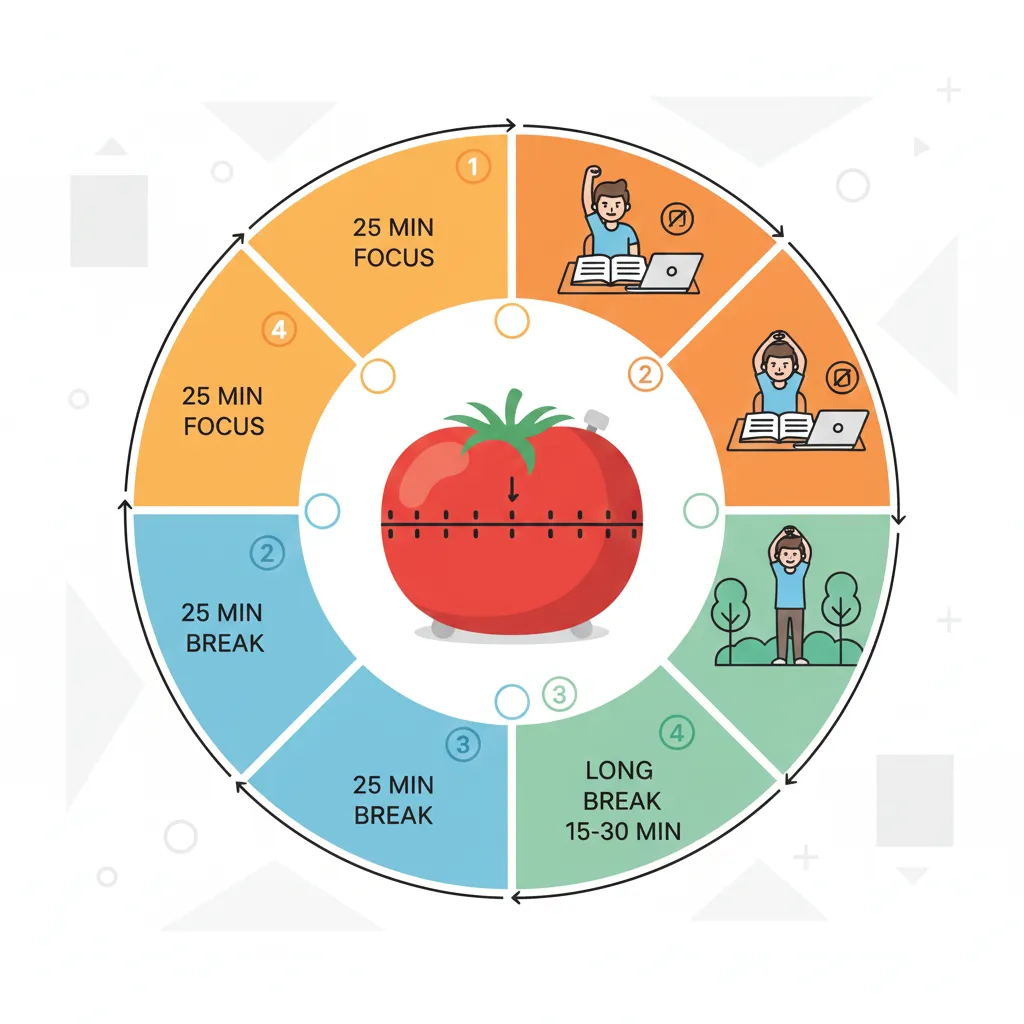
5. The Pomodoro Technique: Work in Focused Sprints
Study for 25 minutes with complete focus, then take a 5-minute break. After 4 sessions, take a longer 15-30 minute break.
Why it works:
- Your brain can only maintain intense focus for so long
- 25 minutes feels achievable (easier to start)
- Regular breaks prevent burnout and keep you fresh
- The timer creates urgency and reduces procrastination
During the 25 minutes, eliminate ALL distractions. Phone off, no social media, just pure focus. That’s the deal.
6. Practice Testing: Take the Test Before the Test
Don’t wait until you feel “ready” to take practice tests. Take them early and often, even if you bomb them.
Where to find practice tests:
- End of chapter problems in textbooks
- Previous years’ exams (ask your teacher or check online)
- Online question banks for your subject
- Make your own practice questions from your notes
The mistakes you make on practice tests are the most valuable learning opportunities. They show you exactly what you don’t know yet.
7. Elaborative Interrogation: Keep Avsking “Why?”
When you learn a new fact or concept, ask yourself why it’s true. Force your brain to make connections.
Example:
Fact: The mitochondria is the powerhouse of the cell.
Ask: Why is it called that?
Answer: Because it produces ATP through cellular respiration.
Ask: Why does the cell need ATP?
Answer: ATP is energy currency for cellular processes…
Keep going until you understand the full chain of reasoning. This creates a web of knowledge instead of isolated facts.
8. Study Before Sleep: Let Your Brain Do the Work
Your brain consolidates memories during sleep. Studying right before bed means that information gets priority processing overnight.
Best practices:
- Review your hardest material 30-60 minutes before bed
- Don’t do anything else mentally taxing after
- Get enough sleep (7-9 hours)—this isn’t optional for memory formation
All-nighters might help you pass a test, but you’ll forget everything within days. Sleep is when learning actually happens.
9. Use Multiple Formats: Read, Write, Say, Draw
Engage different parts of your brain by studying the same material in different ways:
- Read: Process information visually
- Write: Create your own notes and summaries
- Say: Explain concepts out loud
- Draw: Make diagrams, mind maps, or flowcharts
The more pathways to the information, the easier it is to retrieve later. Plus, different formats work better for different types of information.
Check out our detailed guide on how to write a professional resume that does’t cost you jobs.
10. Study in Different Locations
Your brain associates information with the environment where you learned it. Studying in multiple locations creates more retrieval cues.
Study the same material at your desk, then at a coffee shop, then at the library. When test time comes, your brain has multiple contexts to pull from.
Bonus: changing locations also helps beat boredom and keeps you more engaged.
11. Teach Someone Else (Or Pretend To)
Similar to the Feynman Technique, but specifically: find someone who needs to learn the material and teach them.
No one available? Teach your dog. Your plant. A rubber duck. Seriously, programmers do this (“rubber duck debugging”) and it works.
When you teach, you have to:
- Organize your thoughts logically
- Explain things simply
- Answer questions (even if they’re your own)
- Identify gaps in your understanding
All of this deepens your own understanding way more than passive review ever could.
12. Focus on Understanding, Not Memorizing
This one sounds obvious, but most people get it backwards. They try to memorize information before understanding it.
The right order:
- Understand the concept (what it means, why it matters)
- See how it connects to other things you know
- Then memorize the details if needed
When you understand something deeply, memorization often becomes unnecessary because the information just makes sense.
And when you do need to memorize details, they stick way better when they’re anchored to real understanding.
How to Actually Use These Techniques
Okay, so you’ve got 12 techniques. You’re not going to use all of them for every study session. Here’s how to combine them:
A Good Study Session Looks Like This:
- Start with active learning: Read a section, then close the book and write what you remember
- Use Pomodoro timing: 25 minutes of focused work, 5-minute break
- Practice retrieval: Do practice problems or explain concepts without looking
- Interleave subjects: After 2-3 Pomodoros on one subject, switch to another
- Review before bed: Quick review of the hardest material 30 minutes before sleep
Over the week:
- Use spaced repetition to review previous material
- Try teaching the material to someone else
- Take practice tests even if you don’t feel ready
Common Mistakes to Avoid
Mistake 1: Mistaking Effort for Effectiveness
Just because you studied for 6 hours doesn’t mean you learned anything. If you spent that time rereading notes, you probably wasted most of it. Better to do 2 hours of active recall than 6 hours of passive review.
Mistake 2: Studying Too Much at Once
Your brain has limits. After about 90 minutes of intense focus, you hit diminishing returns. Take real breaks, not just “scroll through my phone” breaks.
Mistake 3: Waiting Until You “Feel Ready”
You’ll never feel ready to test yourself. Do it anyway. The discomfort of not knowing something is what drives learning.
Mistake 4: Studying With Distractions
Your phone, Netflix, social media—these aren’t “background noise.” Every distraction pulls you out of deep work and costs you time. If you’re going to study, actually study.
Mistake 5: Neglecting Sleep
You cannot hack this. Sleep is when your brain moves information from short-term to long-term memory. Pull an all-nighter, and you might pass the test, but you won’t remember anything a week later.
Quick Reference: Study Method Cheat Sheet
For new material:
- Active recall (read, then retrieve from memory)
- Elaborative interrogation (ask why)
For retaining information:
- Spaced repetition (review at intervals)
- Study before sleep
For understanding concepts:
- Feynman Technique (explain simply)
- Teach someone else
For staying focused:
- Pomodoro Technique (25-min sprints)
- Change locations
For test prep:
- Practice testing (early and often)
- Interleaving (mix subjects/problem types)
The Bottom Line
Effective studying isn’t about spending more time with your books. It’s about using techniques that actually work with how your brain learns.
Yes, these methods feel harder than just rereading your notes. That’s because they are harder. But that difficulty is the entire point—it’s what makes learning stick.
Start with one or two techniques. Try active recall and spaced repetition first—they give you the biggest bang for your buck. Once those become habit, add others.
You don’t need to be perfect. You don’t need to use every technique every time. Just stop doing the stuff that doesn’t work (looking at you, rereading and highlighting) and start doing more of what does.
Your future self—the one taking the test, or using this knowledge in real life—will thank you.
Discover more from eduhire.blog
Subscribe to get the latest posts sent to your email.